Why layer at all
Most windows are asked to do contradictory things. During the day you want daylight and some privacy. At night you want darkness, warmth and a room that feels closed in and comfortable. One blind or one pair of curtains can do some of that, but rarely all of it.
Layering means giving the window two treatments, each chosen for a different job. A blind at the glass does the practical work. Curtains in front bring softness, colour and insulation. When it is done well, the window looks richer and works better than either layer on its own. For a wider look at balancing the two in a lounge, see our guide to blinds and curtains for a comfortable living room.
Combinations that work
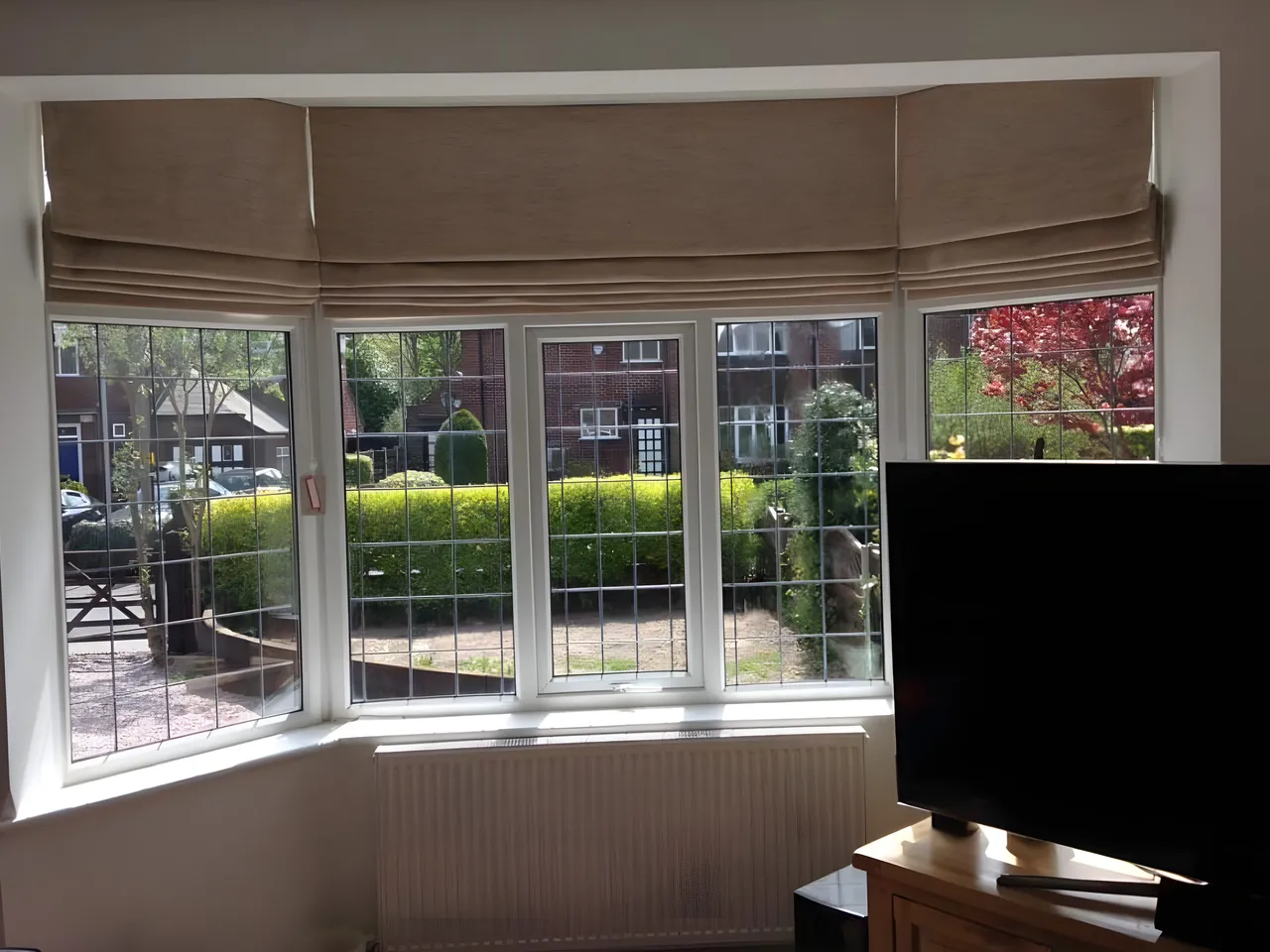
Roman blind with dress curtains. The most popular layered look. The Roman handles light and privacy and stacks neatly at the top when raised. The curtains frame the window and may never be closed, or be closed only on winter evenings. Choose a plain or subtly textured Roman and let the curtains carry the pattern, or the other way round, so the two do not compete. See Roman blinds.
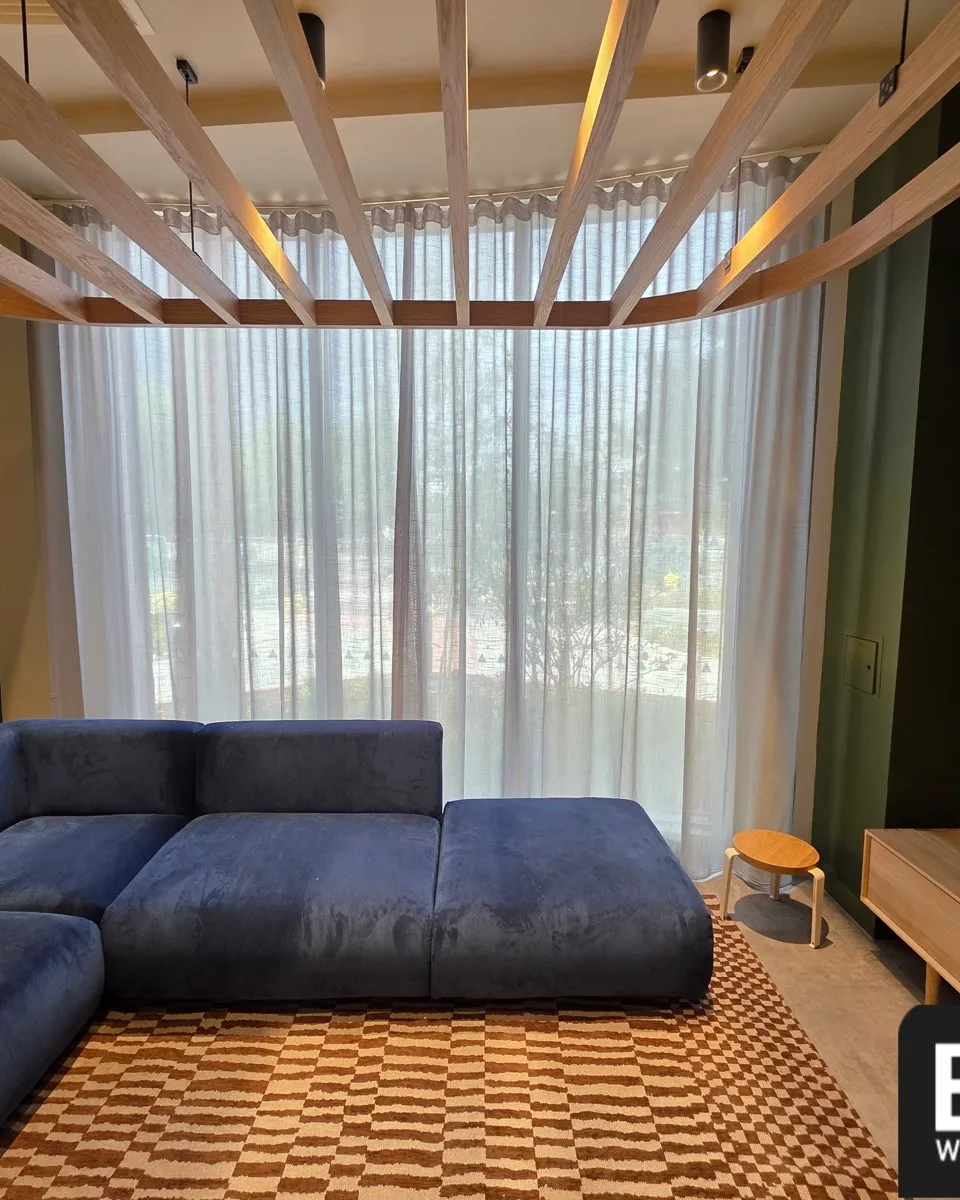
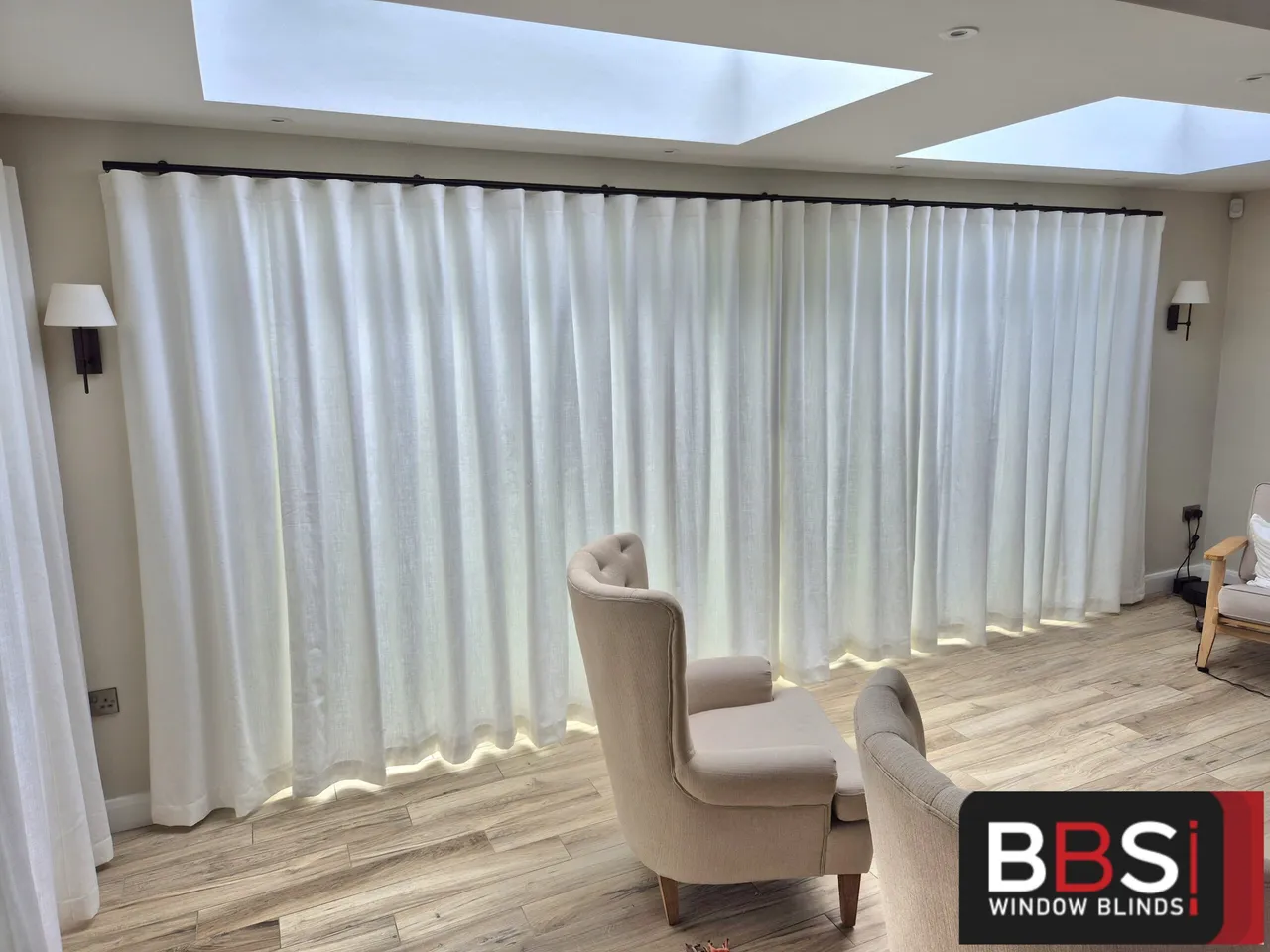
Sheers or voiles with lined curtains. Sheers on their own track soften daylight and stop passers by seeing in, while keeping the room bright. At night, heavier lined curtains draw across in front. On a double track or combined track both layers hang independently. This suits large living rooms, glazed doors and front rooms that face a street.
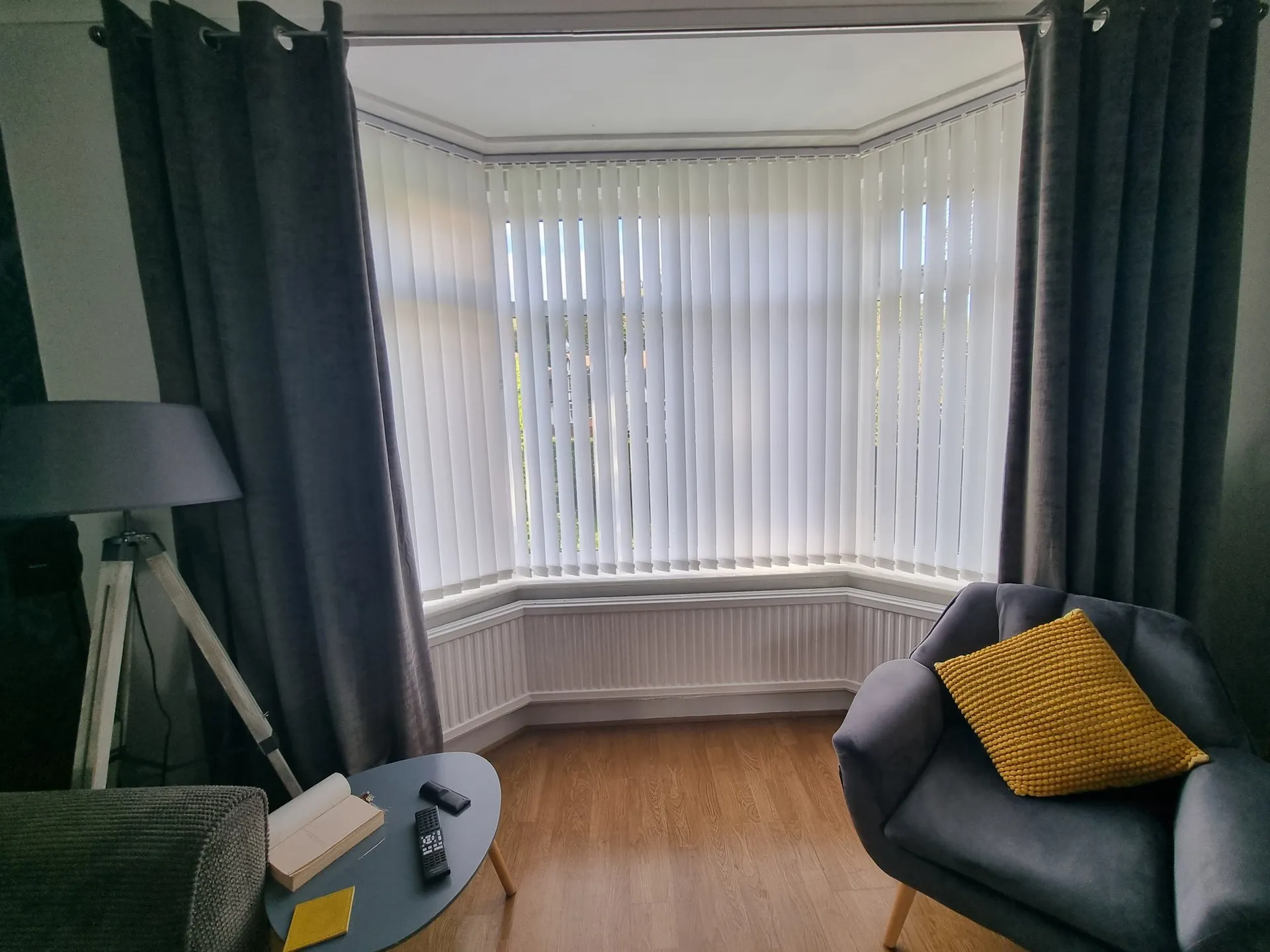
Venetian or roller blind behind curtains. A wood Venetian or a slim roller sits close to the glass for everyday light control, with curtains either side for warmth and finish. Venetians give precise control over light, and rollers disappear almost entirely when raised. There is more on how a Venetian blind controls the view.
Blackout roller behind a Roman. In bedrooms, a blackout roller fitted discreetly in the reveal does the darkening, and a Roman in a decorative fabric in front does the looking good. You get a proper dark room without being limited to blackout fabrics for the part people see. See blackout blinds.
The practical details
Layering looks effortless when it is right and clumsy when it is not. Most of the difference is in the fitting.
Projection. The curtains must clear the blind when both are closed. That means brackets that bring the curtain pole or track far enough off the wall, allowing for the depth of the blind, its headrail and any handles or window furniture. If a blind is fitted inside the recess this is usually easy. If it is fitted outside the recess, the curtain brackets need more projection.
Double brackets and combined tracks. Where both layers are fabric, a double pole bracket or a combined track holds them at the right distance apart, so each one runs freely without dragging on the other.
Stack back. When curtains are open they need somewhere to go. Extend the pole or track far enough beyond the window that the curtains stack on the wall rather than across the glass, or you lose daylight you are paying to let in. On bay windows this needs particular care, which our guide to dressing a bay window covers.
Lining and interlining. Lined curtains hang better, protect the face fabric from sun and add insulation. Interlining, a soft blanket layer between the face fabric and the lining, gives curtains a fuller drape and makes a real difference to warmth, particularly on single glazed or draughty period windows. A blackout lining can replace a blackout blind if you would rather have only one back layer.
Heights and lines. Fix the curtain pole high and the blind at a consistent height so the window reads as one composition. On period windows with tall architraves, hanging curtains close to the ceiling makes the room feel taller.
When layering is worth the money
Two layers cost more than one, so it is fair to ask where they earn their keep.
Bedrooms. The combination of blackout and softness is hard to beat for sleep, and the curtains add real warmth on winter nights.
Large living rooms. Big windows and big rooms can feel bare with a single blind. Curtains add scale and comfort, and sheers keep large glazed areas private in daylight.
North facing rooms. These rooms lose heat and can feel cold. Interlined curtains over a blind noticeably improve comfort in the evenings.
Period rooms. Tall windows, deep reveals and original features are made for layered dressing, and it is often the most authentic look. Our guide to shutters or blinds in a period property covers those windows in more detail.
When one treatment is better
Layering is not always the answer. Kitchens and bathrooms usually want one practical blind that is easy to clean. Small rooms can feel crowded with curtains taking up wall space either side. Modern rooms with a clean, minimal look often suit a single, beautifully made Roman or roller better than a layered window. Windows set close to a corner may not have room for curtains to stack back at all. For the kitchen, see kitchen blinds for small spaces.
In those rooms, putting the whole budget into one excellent treatment in the right fabric almost always gives a better result than two compromises.
Planning it room by room
If you are dressing several rooms, it helps to decide where layering adds most and where a single treatment will do, so the house feels consistent without every window looking the same. We make every curtain and blind to measure, fit them with our own team and fit child safety devices to BS EN 13120 on every blind. From survey to fitting typically takes seven to ten days.
When you are ready, book a free home visit and we will bring the fabric books so you can see blinds and curtains together in your own light.