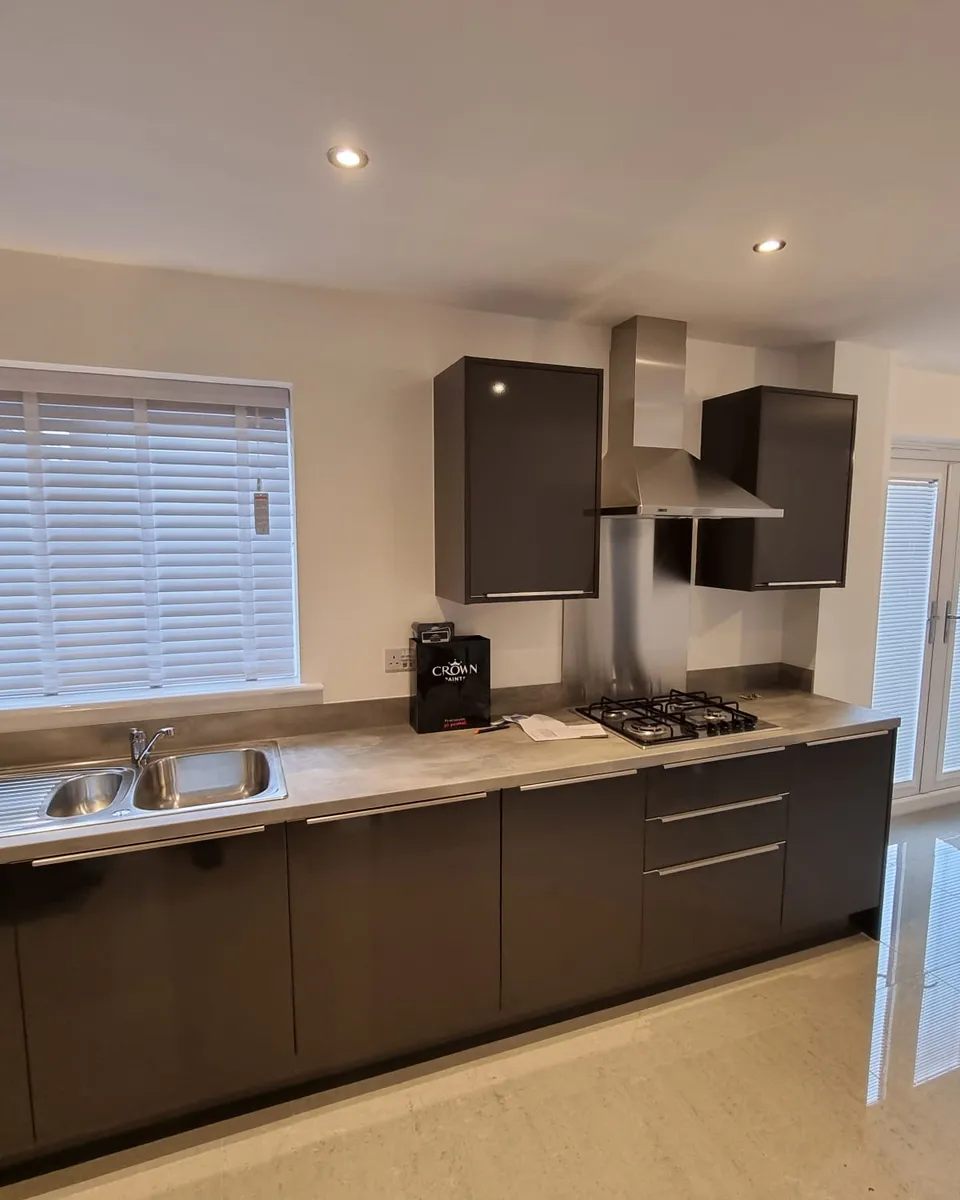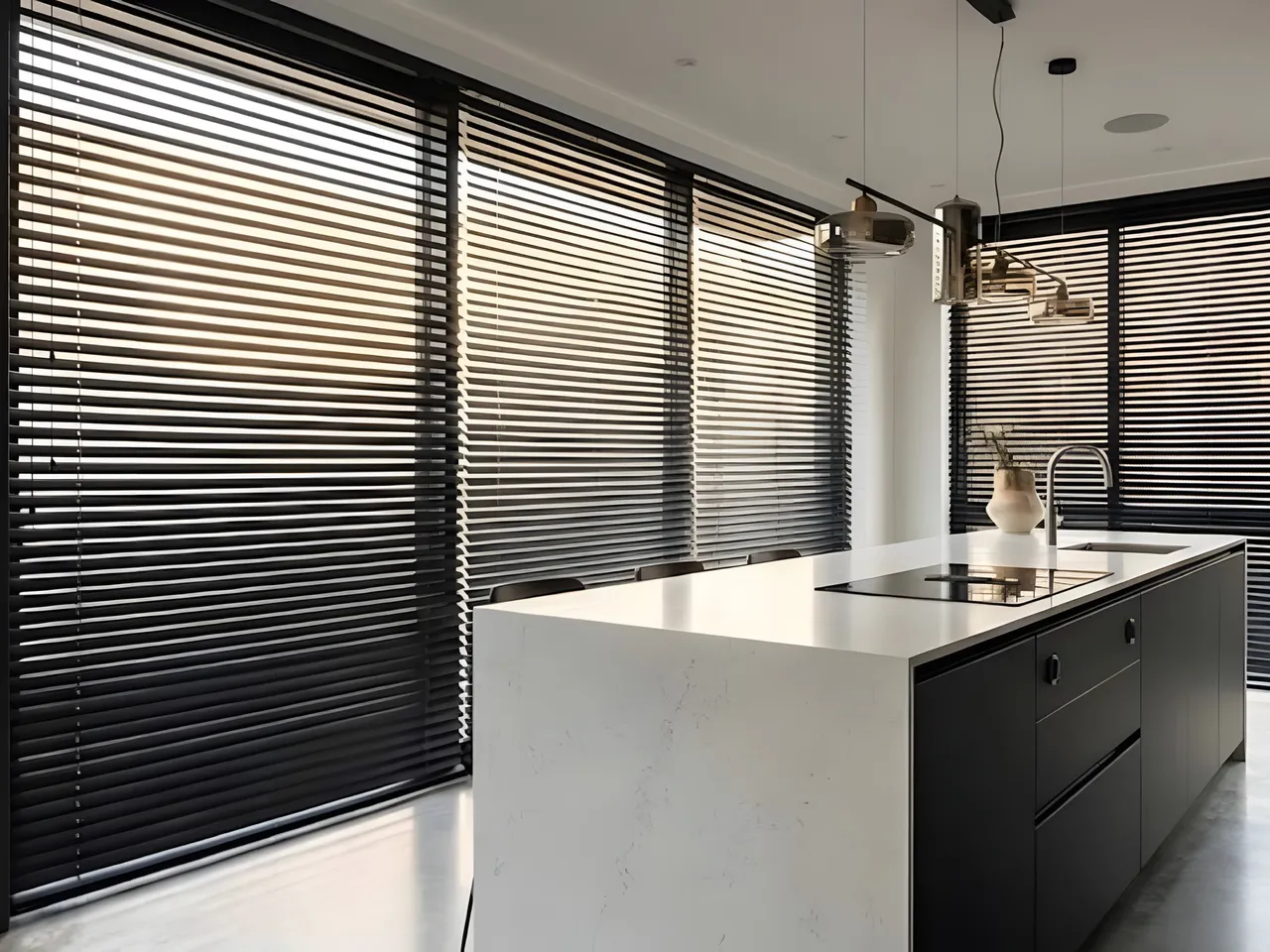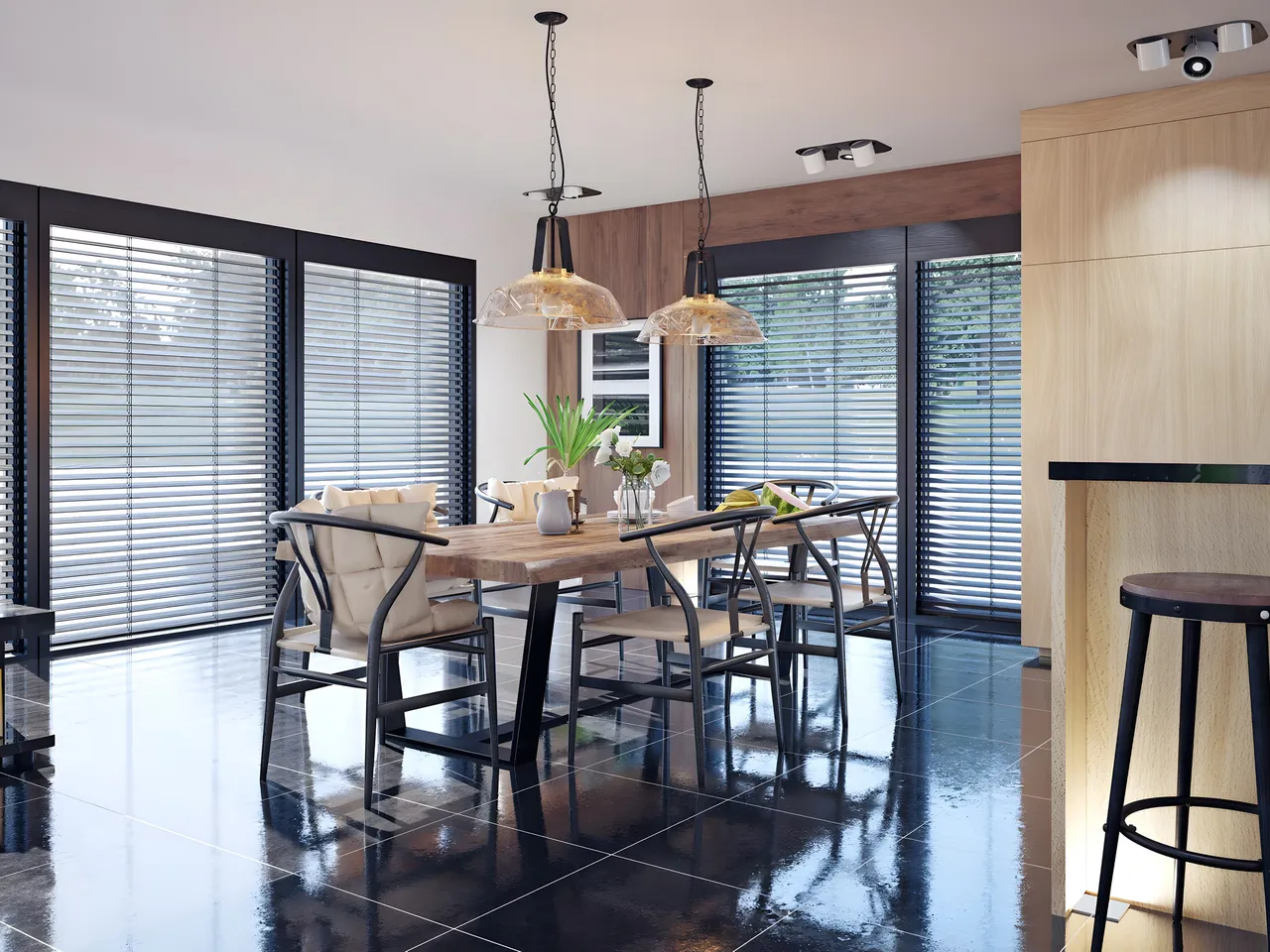
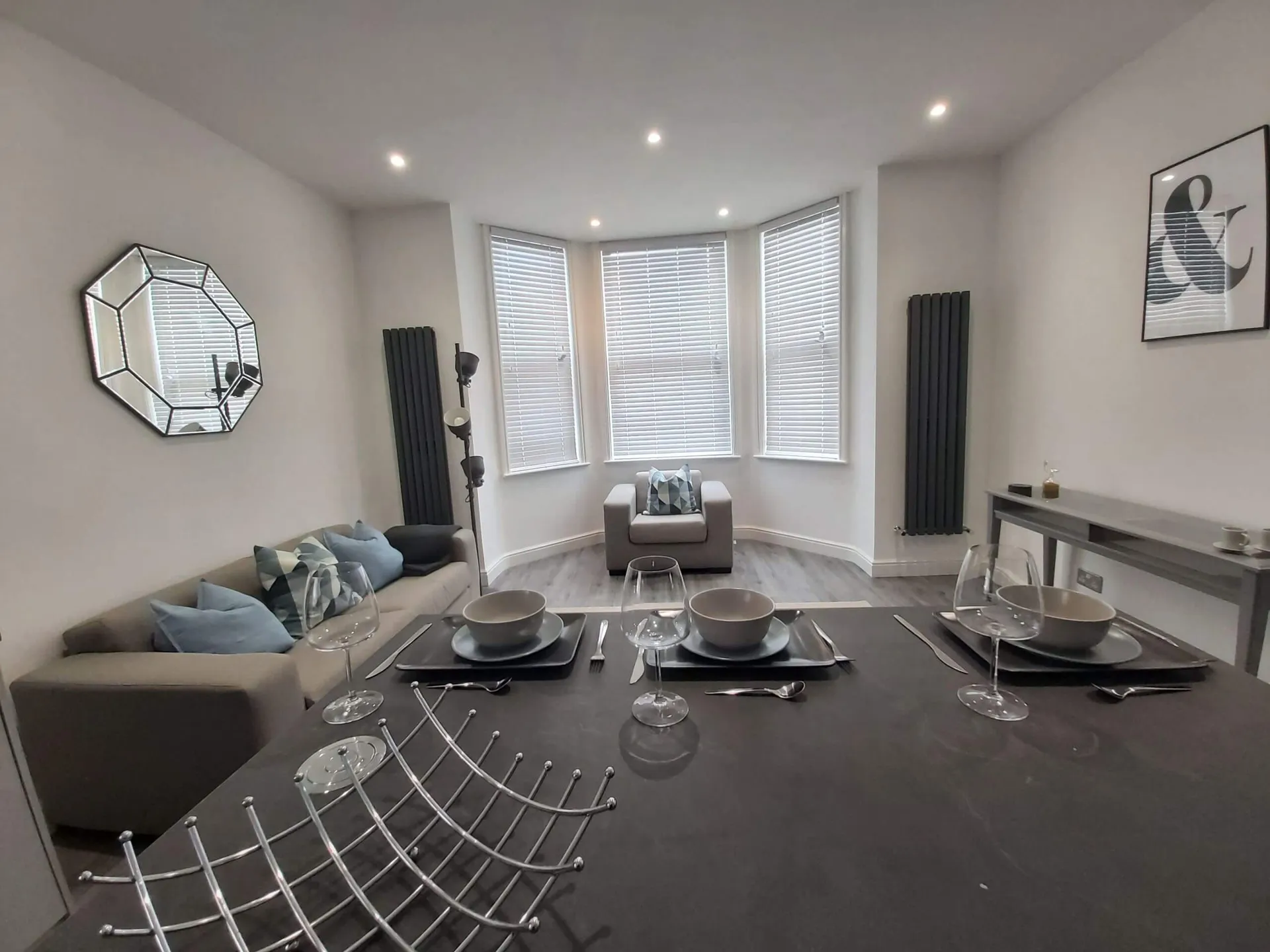
How the complete blind controls the view
Venetian construction can influence privacy and light. Slat angle, spacing, control components and the fit within the opening all affect what you can see through the window.
Compare the complete blind in use, then ask BBS to show the current options that suit your room and window.
Look beyond the slat
Traditional Venetian blinds have lift and tilt components that pass through or around the slats. Their position, the spacing between slats and the fit within the opening can all affect the small lines of light visible when the blind is closed.
Some designs reduce those interruptions or arrange the components differently. The result should be judged as a complete blind rather than from a single loose slat.
Test several angles
Venetian blinds are useful because they do not have to be fully open or closed. Tilting the slats can direct daylight towards the ceiling, reduce a direct view into the room or keep the lower part of a window more private.
Stand in the positions that matter. Check the view from the sofa, desk or pavement outside, and repeat the test when the interior light is on. Privacy changes as the brighter side of the glass changes.
Choose a suitable finish
Timber, wood-effect and aluminium finishes have different visual weight and care needs. Pale slats can keep an opening bright, while darker finishes make the horizontal pattern more prominent. Wider slats usually create a bolder, calmer rhythm.
Kitchens and bathrooms add moisture and cleaning considerations. Large or frequently used windows add weight and operating considerations. A home visit allows the full opening and its daily use to be assessed before the current product is confirmed.
Ask what is current
Product ranges change. Bring the question rather than relying on an old range name: how much light control and privacy do you want, what finish suits the room, and how will the blind be used each day?
BBS can then show the relevant current samples and explain the options that fit the window.