A bay is several windows, not one
The bay is usually the best window in the house and the hardest to dress. It is three, four or five separate panes set at angles to each other, and every choice you make has to work on all of them at once. Get it right and the bay becomes the focal point of the room. Get it wrong and you see every gap, every mismatched bottom bar and every blind that bumps into its neighbour.
So before choosing fabric or colour, it helps to be clear about what kind of bay you have.
Know the shape of your bay
Splayed bays are the classic Victorian and Edwardian shape: a wide front face with two side faces angled back at around 45 degrees. Three sided is most common, five sided bays turn more gently and feel rounder.
Square or box bays have side faces at 90 degrees to the front. They are easier to dress because each face is a straightforward rectangle, and the corners are true right angles.
Curved or bow windows have no corners at all. Blinds can still be fitted per pane, but curtains need a track bent to follow the curve precisely.
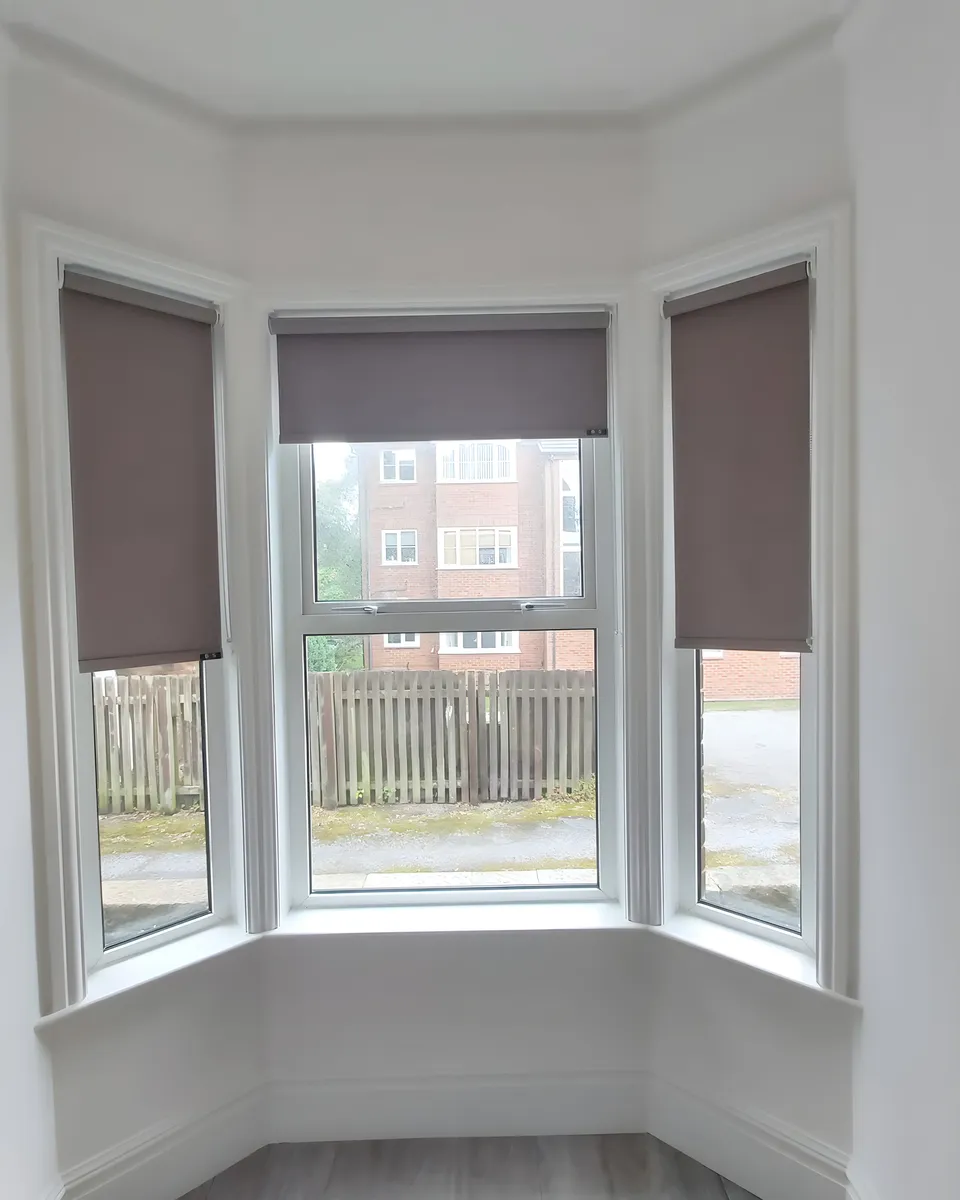
Then look at the depth. A deep reveal with room above the glass gives you the option of fitting blinds inside the recess, so each one sits neatly within its own pane. A shallow reveal, or a sill with a radiator directly beneath, often pushes you to fit outside the recess or to use a treatment that stops above the sill.
Option one: a blind for every pane
Fitting a separate blind to each pane is the tidiest way to dress most bays. You get independent control, so you can lower the blind on the side facing the street and leave the others up.
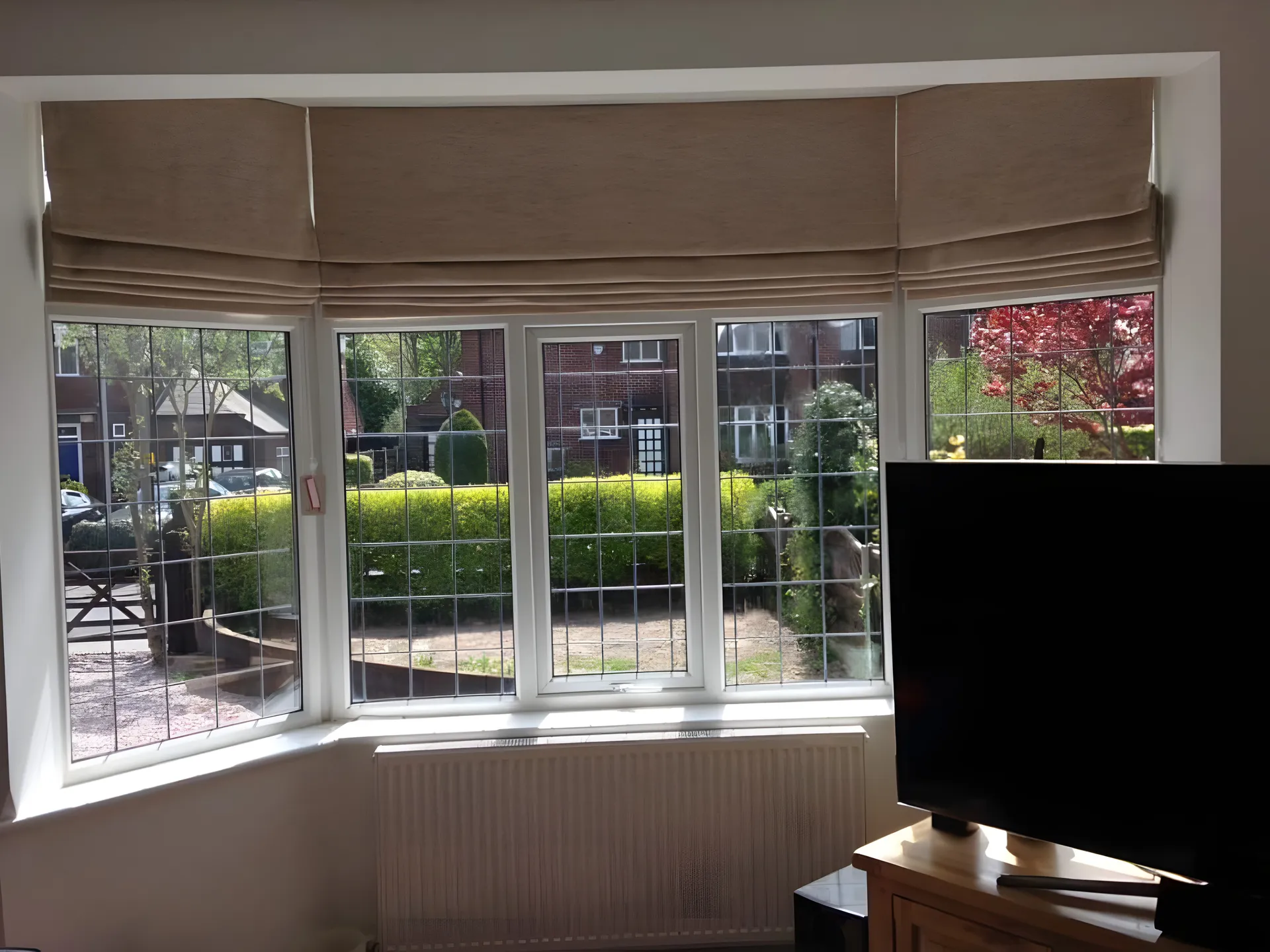
Roman blinds suit bays beautifully because the folds stack neatly at the top and the fabric softens all those hard angles. The trick is making sure the folds line up across every pane when the blinds are raised, so the bay reads as one line rather than five. On a bay we make each blind with matching fold spacing and set every headrail at the same height. See our Roman blinds for fabrics.
Venetian blinds in wood or faux wood give a crisp, architectural finish and precise control over light. Keeping the slats level across every face matters here too, because a slat that sits a few millimetres out on one pane catches the eye straight away. See how a Venetian blind controls the view for what to look at in the slat and lift details.
Roller blinds are the cleanest and most discreet choice, and the one that sits closest to the glass. They work well in deep reveals and in bays where you want the window frame to stay visible.
Perfect Fit blinds clip into the window frame itself, with no drilling. On a uPVC bay with tilt and turn or outward opening sashes, they move with the window and leave the sill completely clear. They are worth considering on bays with a radiator directly underneath. More on Perfect Fit blinds.
Handling the corners
The corners are where bay blinds succeed or fail. On a splayed bay, the headrails of neighbouring blinds meet at an angle, and if they are all the full width of the recess they will clash. A good fitter allows for this at survey: side blinds are made slightly narrower or set to overlap in a particular order, so they operate freely and the light gap at the corner is as small as it can be.
Bottom bars should finish at the same height on every face. When blinds are fitted inside the recess on a bay where the sill steps or slopes, that means measuring each drop separately rather than assuming one size fits all.
Option two: shutters for each face
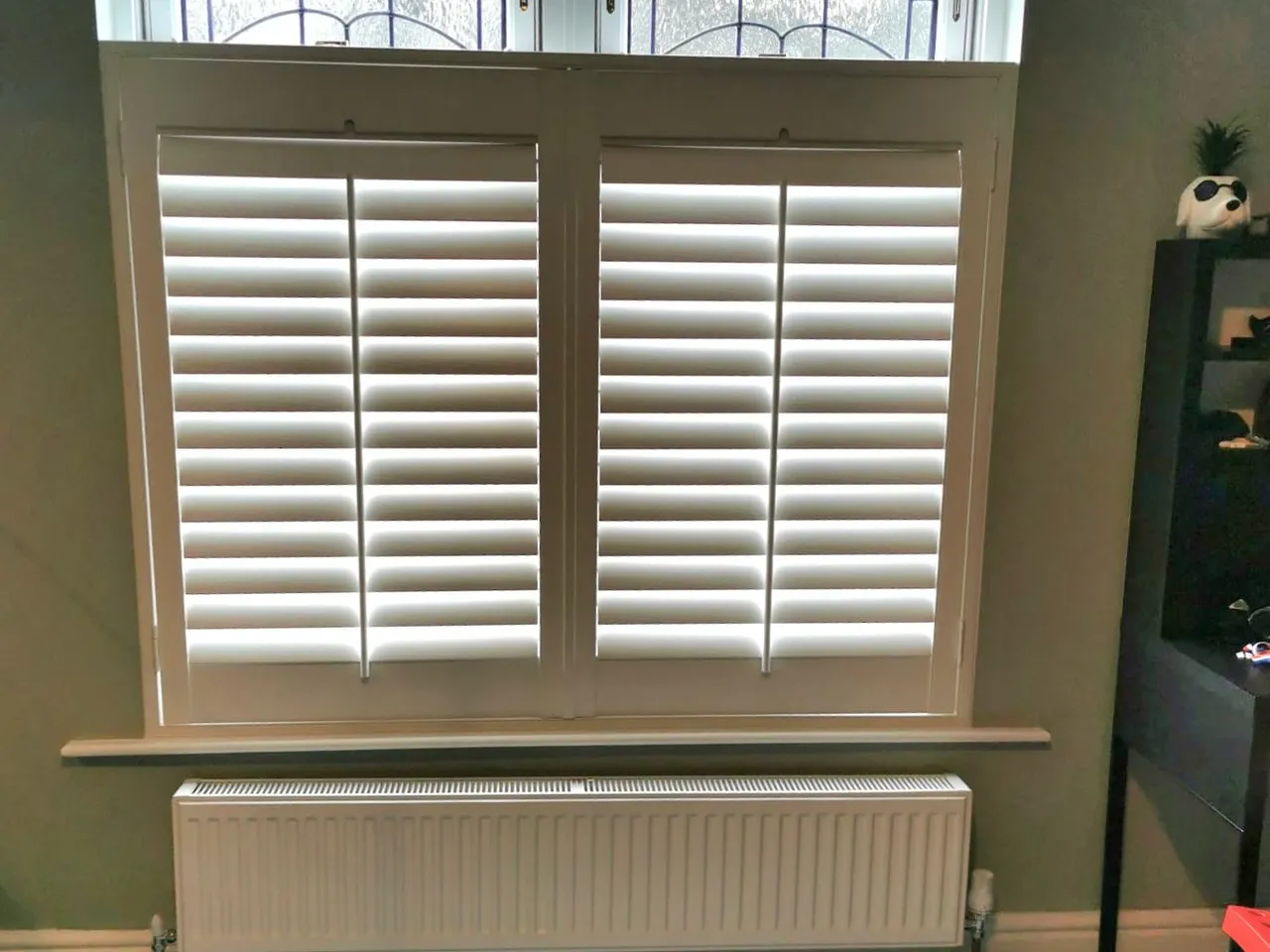
Interior shutters are the most permanent way to dress a bay and suit period houses particularly well. Each face gets its own frame and panels, and the louvres let you angle light and privacy across the whole bay in one movement.
Full height shutters give a formal, finished look. Tier on tier lets you open the top half for light while keeping the lower half closed for privacy, which is ideal on a front bay facing a busy pavement. Café style covers only the lower half and leaves the top of the window clear.
Shutters need enough reveal depth or frame projection to clear handles and opening sashes. We check this on every face at the survey, because it often varies from one side of a bay to the other. More on interior shutters.
Option three: curtains across the whole bay
Curtains across a bay make the room feel warmer and more generous, and they add real insulation on cold nights. There are two ways to hang them.
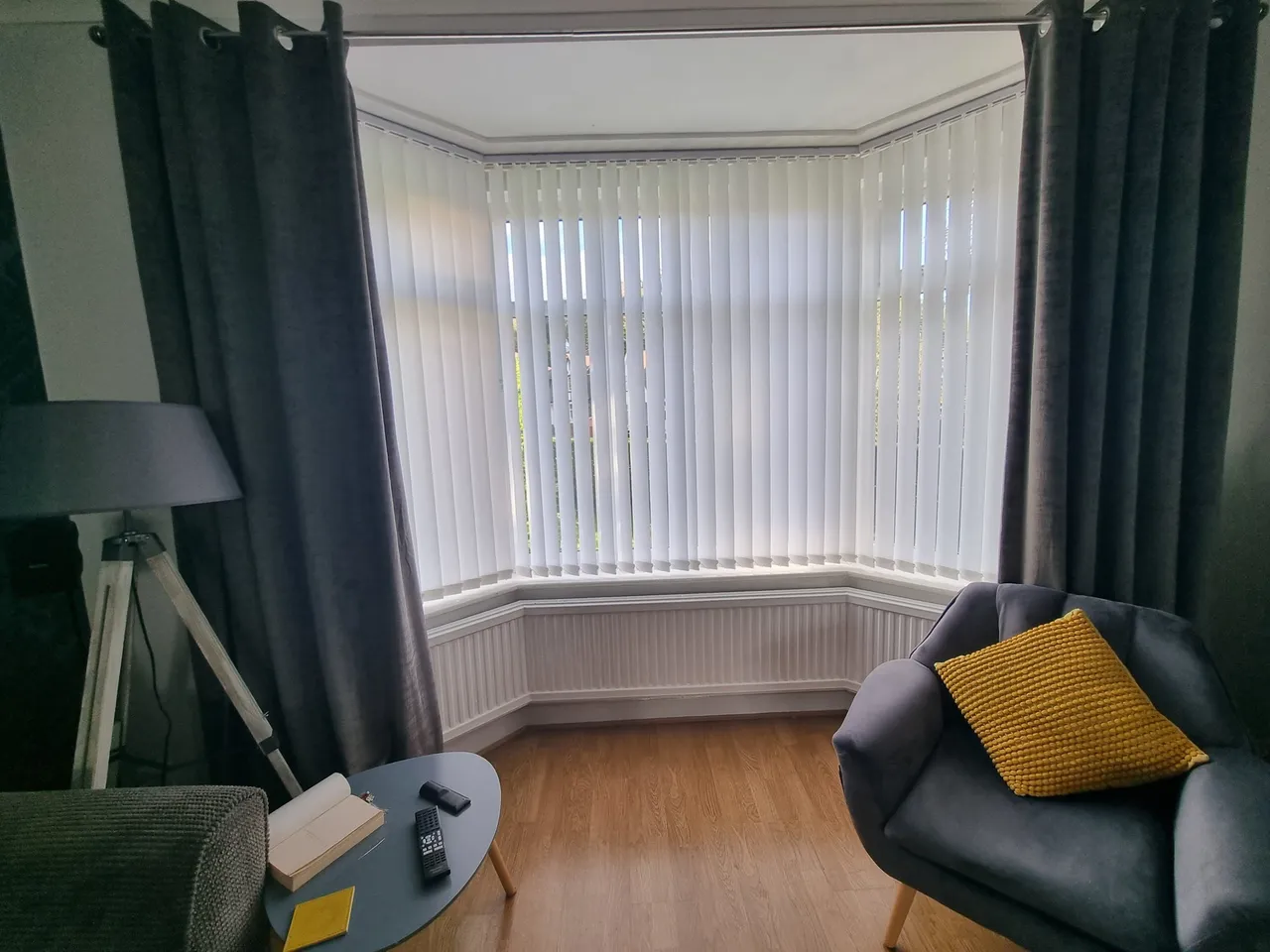
A bent bay track is shaped on site or made to a template to follow the exact angles of your bay, and is usually fitted to the ceiling or just above the window. It lets curtains run all the way round without interruption, which is what you want if you plan to draw them fully closed.
A bay pole uses corner joints to follow the angles. Poles look more decorative but the curtains stop at each joint, so they suit dress curtains that frame the bay rather than close across it.
The heading changes the look. A wave heading gives soft, even folds and runs smoothly round the bends of a track. Pinch pleat is more traditional and suits period rooms. Whichever you choose, allow for stack back: the space the curtains take up when open. On a bay you usually want them to stack on the wall either side rather than on the glass, so the bay stays full of light.
Combining blinds with dress curtains
Often the best answer is both. Blinds fitted in each pane do the daily work of light and privacy, and a pair of dress curtains on a pole either side of the bay adds colour, softness and a sense of occasion. This is how many of the most comfortable bays we fit are dressed. Our guide to layering curtains and blinds goes into the details, including projection so the curtains clear the blinds.
Privacy at night, light by day
It is worth thinking about the bay at two times of day. During the day most people want as much light as possible with a little privacy from the street. At night, with the lights on inside, a front bay becomes a shop window. A sheer or a light filtering blind handles the daytime, and a lined curtain or blackout blind handles the evening. Choosing one treatment for each job usually works better than asking one treatment to do both.
Period bays and older houses
Older bays are rarely square, reveals vary, and plaster can be soft. If your bay is in a Victorian or Edwardian house, our guide to shutters or blinds in a period property covers sash windows, fixings and original features.
Getting it right first time
Every bay we dress is measured on each face, with the corners, sill and radiator checked before anything is made. Every blind is made to measure and fitted by our own team, with child safety devices to BS EN 13120 fitted and adjusted on every unit. From survey to fitting typically takes seven to ten days.
If you are planning a bay as part of a wider room, we are happy to bring the sample books to you and talk it through at a free home visit. Seeing fabrics in the room is worth the time, as why samples still matter explains.