Start with the practical layer
In a layered window, the blind usually does the detailed work closest to the glass. It may soften direct sun, reduce screen glare or give daytime privacy without closing the curtains across the whole view.
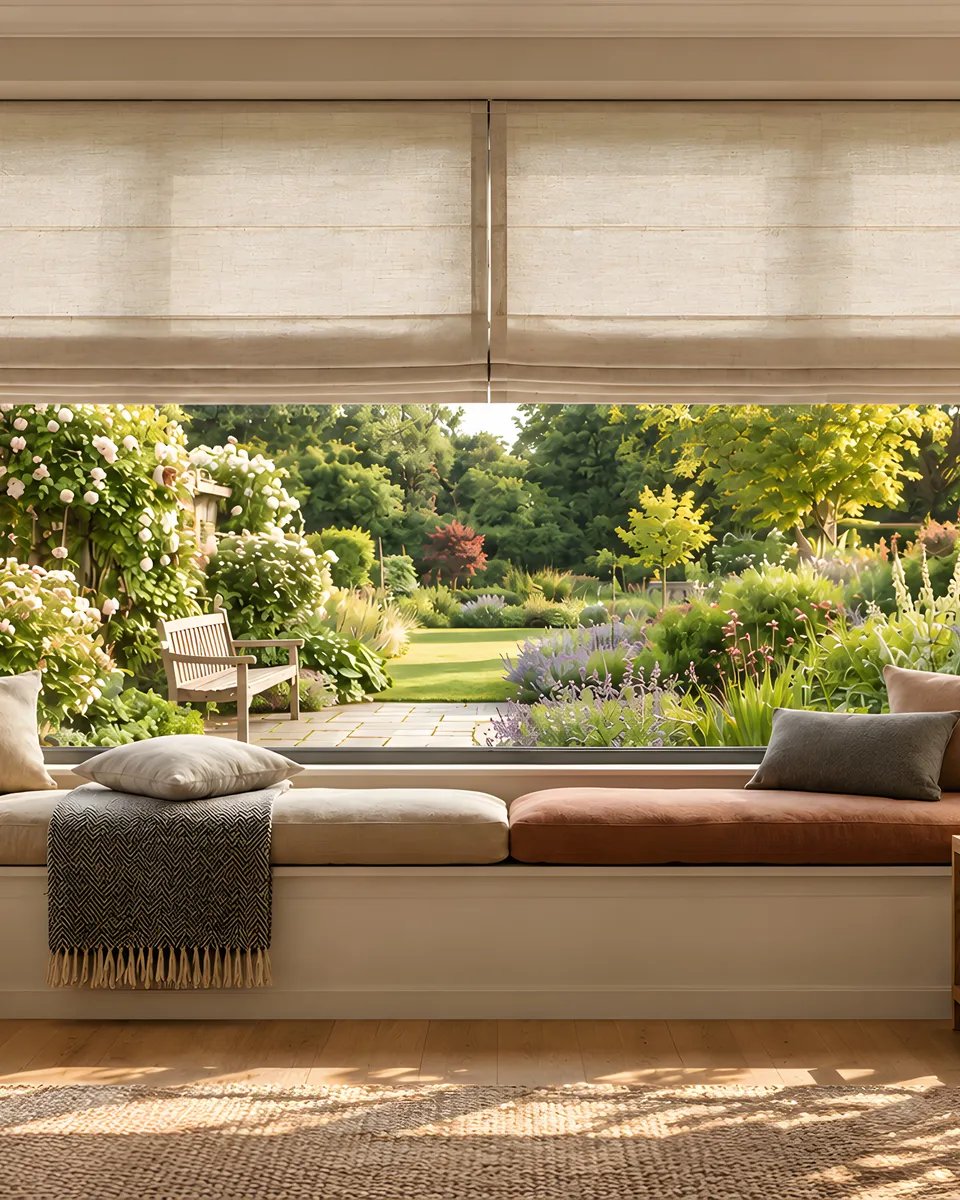
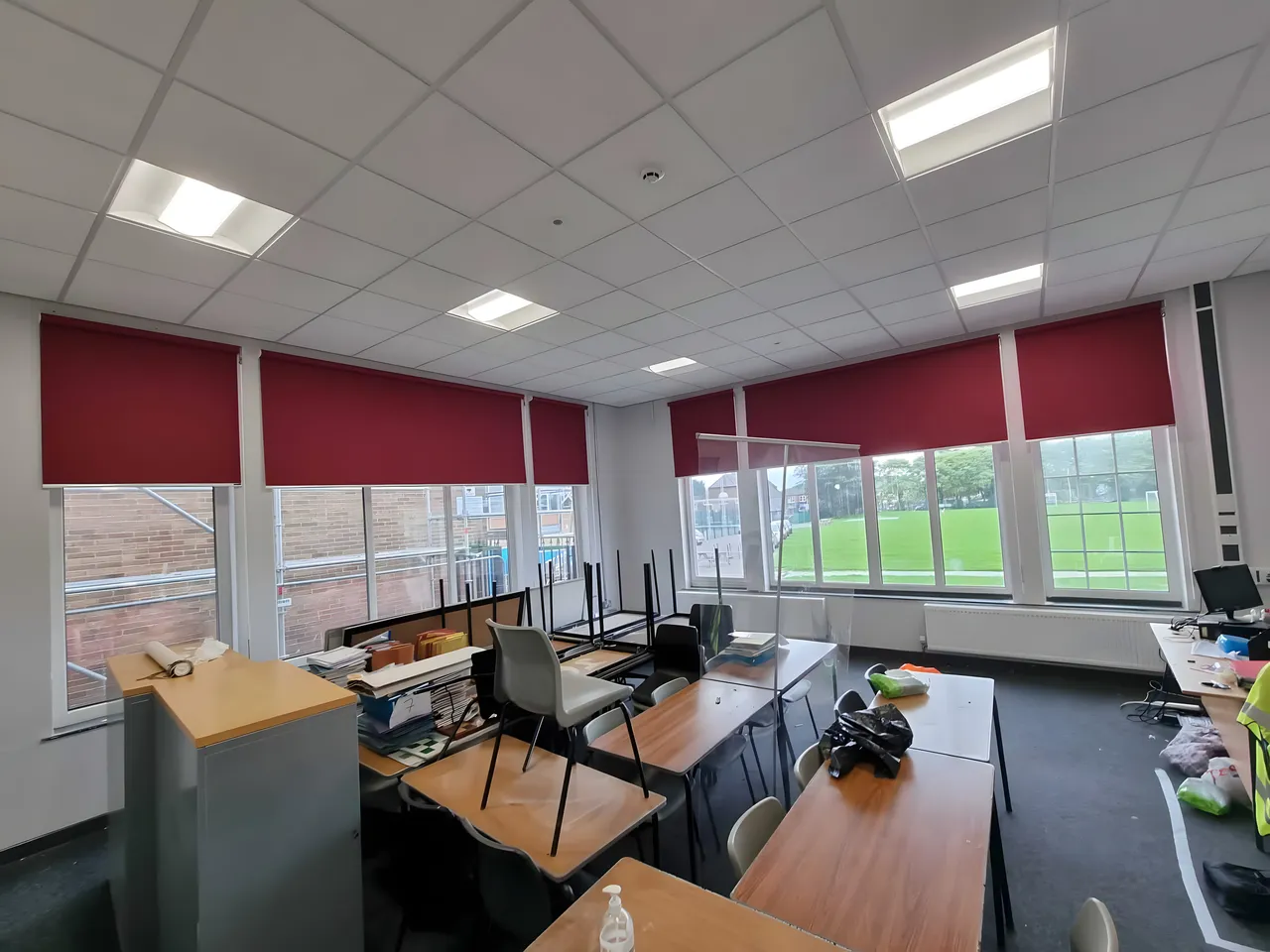
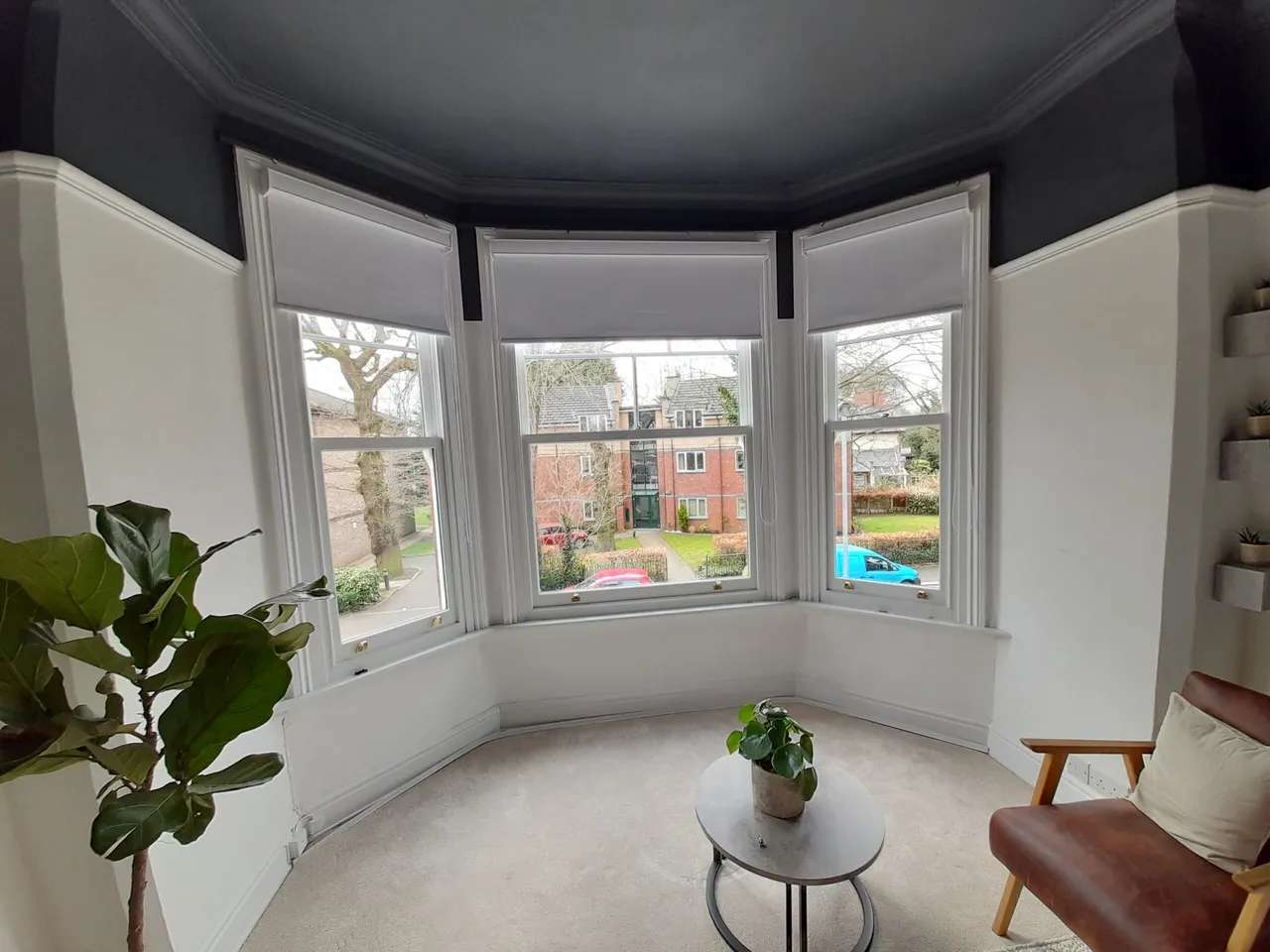
Roller blinds keep this layer visually quiet. Venetian blinds allow gradual adjustment. Roman blinds add more fabric and can become a decorative feature in their own right. Choose the control first, then decide what the curtains should add.
Use curtains to frame the room
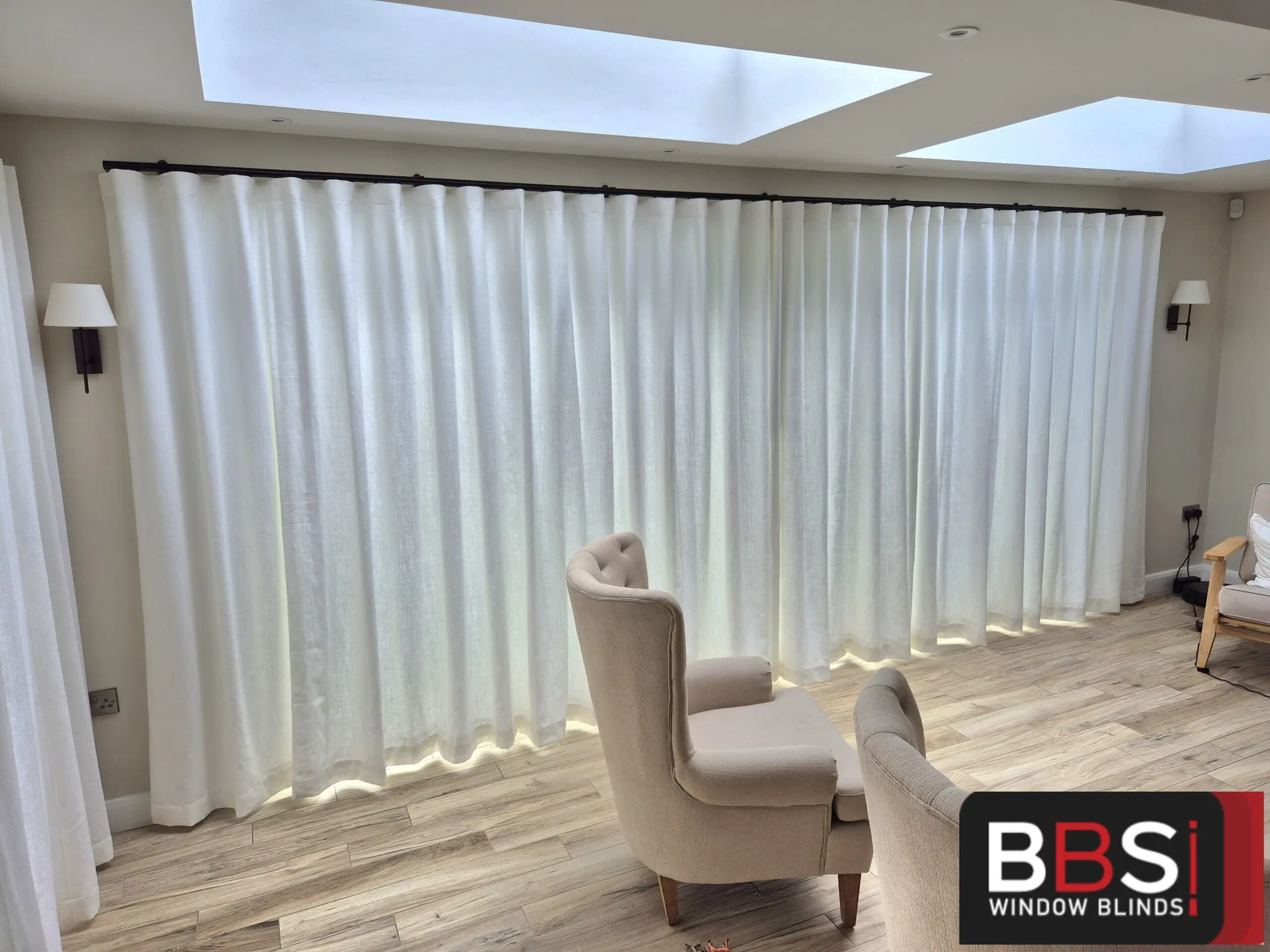
Curtains introduce height, movement and texture. Hung beyond the sides of the opening, they can frame the window without taking away useful glass when open.
Check the space required for the fabric to stack. A radiator, sofa or deep sill may affect the length and position. Full-length curtains can make a room feel taller, but only when they hang cleanly and remain practical around the furniture.
Connect colour without matching everything
The blind and curtains do not need to be identical. A plain blind can sit behind patterned curtains, or a textured Roman blind can work with simpler outer fabric. Link them through one shared undertone or a colour repeated elsewhere in the room. For a fuller method, see how to choose blind and curtain colours.
Too much close matching can feel flat. Controlled contrast is often more natural, particularly when the wall, floor and upholstery already introduce several finishes.
Plan the evening atmosphere
Daylight is only half the test. View samples under the lamps used in the evening, when the window becomes darker and fabric colour may appear stronger. The same check applies to privacy once the lights go on, which we cover in privacy as the nights draw in.
A filtering blind with lined curtains can give different levels of closure. In a room used for reading, television and conversation, that flexibility can be more useful than one treatment expected to handle every situation.
Keep the track and blind clear
The two systems must operate without colliding. Check that the blind can raise fully, the curtain can draw freely and handles remain accessible. Bay windows and doors may need a more considered arrangement across several panels.
A home visit allows the full window, wall space and furniture position to be measured together. Bring the samples into the room and judge the combination from the places where you normally sit.