A care home is lots of different rooms
It is tempting to pick one blind and put it through the whole home. One fabric, one colour, one order. It is simpler to buy and it looks tidy from the car park.
The trouble is that residents use each room in a completely different way. A bedroom has to go properly dark in the middle of the afternoon. A lounge needs the glare taking off the television without turning it into a cave. A room on a dementia unit may need a product that no ordinary blind shop sells. So the first job is to split the building into the rooms that need different things, and then keep the finish consistent within each group.
Bedrooms: dark whenever the resident needs it
People in care homes sleep at all sorts of times. Afternoon rests, early nights in summer, late mornings, and residents who are unwell and in bed through the day. A dim-out fabric that is fine in an office will still let a bright summer evening into a bedroom.
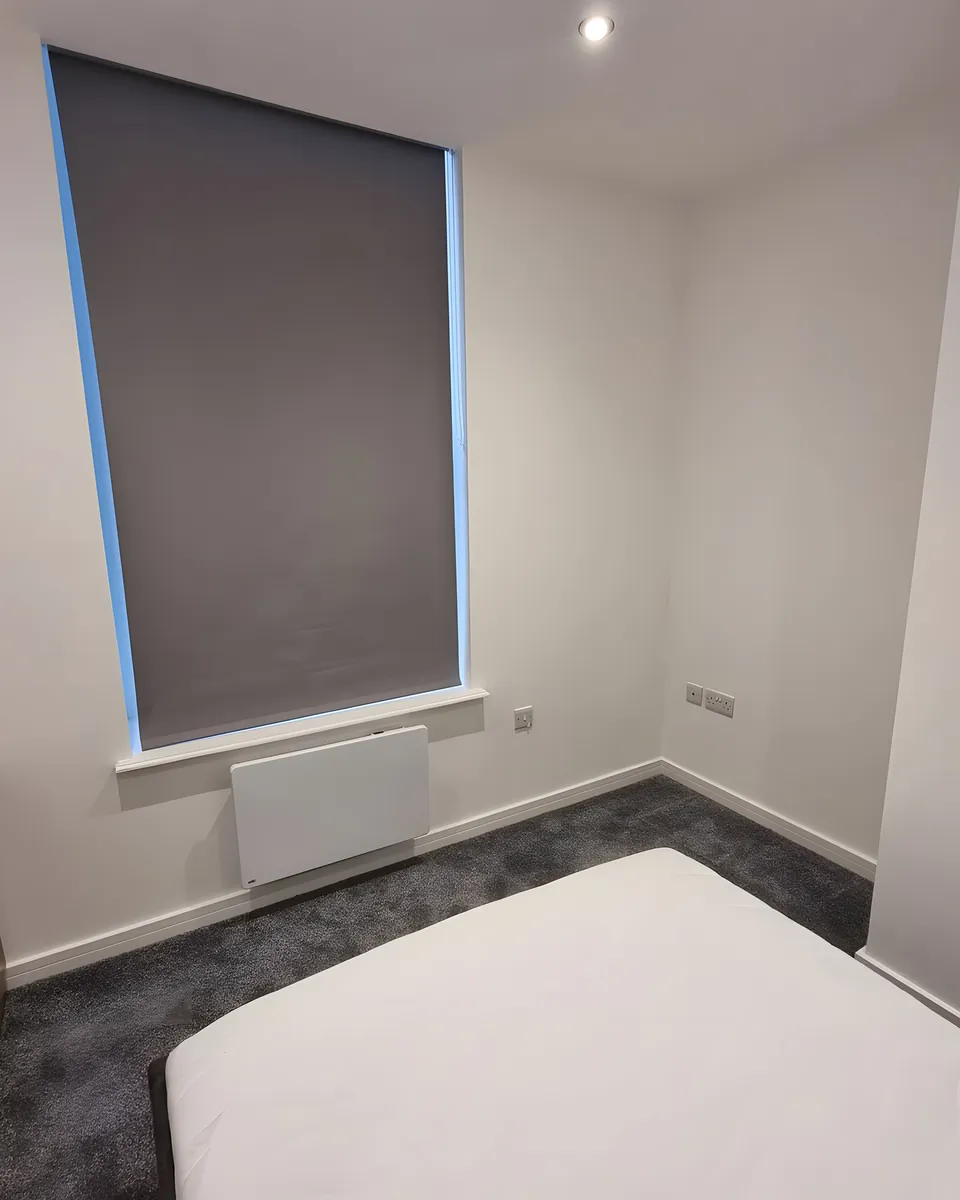
Blackout fabric in resident bedrooms lets a room be made dark whenever it is needed, not only after sunset. At Beech House Care Home in Partington, BBS fitted blackout roller blinds to every resident bedroom for exactly that reason, so residents can shut the light out fully for sleep at any hour.
The blind also has to be easy for a resident, or a carer, to work. A smooth, light operation that does not need reaching over furniture is worth more than any fabric feature.
Day rooms and lounges: soften the light, keep the daylight
Shared rooms are where residents spend the day, and most of them want daylight and a view. What they do not want is low sun straight across the room, glare on the television, or hard bright patches and deep shadows on the floor.
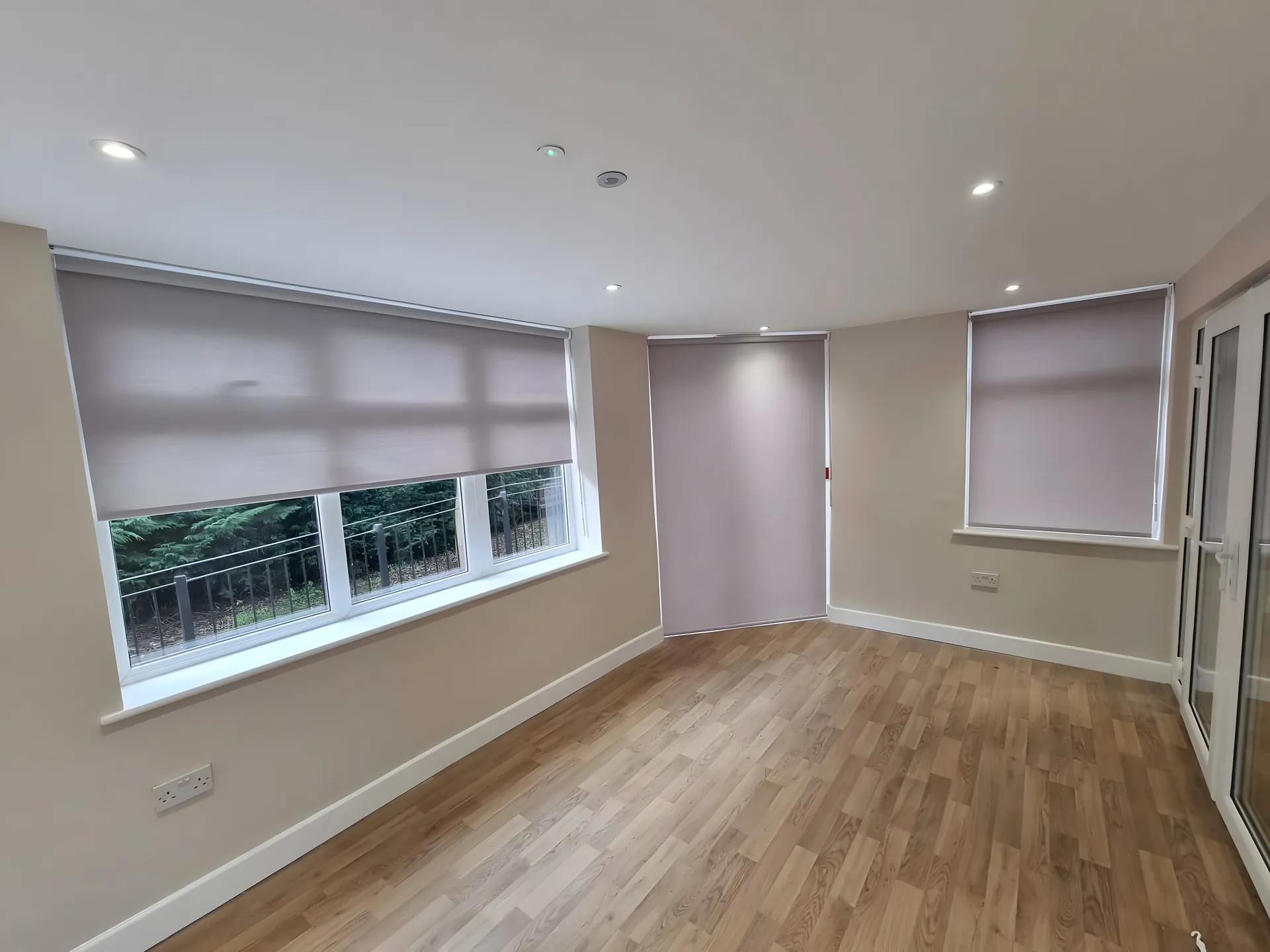
Dementia design guidance generally favours even light, plain colours and clear contrast, and warns that strong shadows and busy patterns can be confusing or even frightening for someone living with dementia. A plain dim-out or screen fabric that softens the light, in a calm colour that contrasts with the wall, does that job. At Beech House the day rooms, lounges and communal areas took dim-out roller blinds, one neutral colour across the building, so the light is softened without losing it.
Windows and restrictors
Falls from windows are a known risk in health and social care buildings, particularly for residents who are confused and may treat a window as a way out. HSE guidance is that where assessment shows a fall risk, window openings should be restricted to 100 mm or less, with restrictors that can only be released with a special tool or key.
A blind should never get in the way of that. When the blinds are surveyed, the fitter should check where the restrictors sit, make sure the blind and its brackets clear them, and avoid adding anything to the window that could be used as a foothold or pulled on to get a grip. If a restrictor is missing or damaged, it should be reported to the home, not worked around.
Cords and chains
Blind cords and chains are usually talked about in terms of young children, but loose loops are a hazard for some adults too. BS EN 13120 child safety devices are fitted and adjusted on every unit BBS installs, with chains and cords secured at the correct height.
In a care home it is often worth going further and choosing blinds with no loose cord at all. Spring or constant tension rollers, crank operation or motorised blinds all remove the loop entirely. Motorised blinds also help in rooms where residents cannot reach the window easily, or on high windows in lounges and conservatories.
Do dementia and mental health units need special blinds?
Some homes have a unit, or a few rooms, where residents are assessed as being at risk of self-harm. In those rooms an ordinary blind, curtain track or cord can be a ligature point.
Load release products are designed to let go under a set weight rather than take it. Which rooms need them is decided by the home’s own clinical risk assessment. The rest of the home can keep ordinary contract blinds, so the budget goes where the risk is. BBS fitters are Yewdale Kestrel certified installers across the fitting team, covering the load release range of window curtain tracks, divider and cubicle tracks, roller blinds and vertical blinds. The certificates for the team on your job come with the quote. The difference between cubicle, divider and window track is set out in our track guide.
Which fire certificate do care home blinds need?
Under the Regulatory Reform (Fire Safety) Order 2005, the responsible person for the home has to manage fire risk, and window dressings are part of that. For contract blinds and curtains, the usual reference is BS 5867 Part 2, and certificates are issued per fabric rather than per range.
BBS supplies Yewdale contract fabrics certified to BS 5867 Part 2 Type B, with the certificate for the specified fabric supplied on every commercial order. A Type C certified fabric is available where the specification calls for it. Keep those certificates in the fire file.
One thing that catches homes out is residents bringing their own curtains to make a room feel like theirs. Those rarely come with any fire certificate, so it is worth your fire risk assessment deciding how they are handled, before somebody hangs them.
Cleaning and wear
Care home blinds are handled more, cleaned more and knocked more than most. Fabrics that can be wiped down, bottom bars that are not easily bent, and controls that stand up to daily use all pay back. At Beech House the fabrics were chosen to stand up to daily use in a care setting.
Fitting around residents
Fitting in an occupied care home is about calm, not speed. BBS fits with its own directly employed team, Enhanced DBS across the fitting team, working room by room around residents and staff. A project specific RAMS comes to you before works begin, and we carry £5,000,000 public liability and £10,000,000 employers’ liability cover with Aviva.
For a residential, nursing or dementia care home, start on the care home blinds page.