What is the difference between cubicle, divider and window track?
Walk onto most wards, clinics or treatment suites and there will be three different kinds of track on the ceiling or at the window. They look similar from the floor, and in a lot of specifications they all get written down as “curtain track”. That is where the mix-ups start.
They do different jobs, they are fixed differently, and they carry different curtains. Getting the name right on the drawing saves a wrong order, a second visit and a room out of use for longer than it needs to be.
Cubicle track
Cubicle track runs round a bed space, a couch or an examination area, so a curtain can be drawn round the patient. It is the track you see on a hospital ward, in A&E bays and in treatment rooms where people undress.
A few things make it different from anything else on the ceiling:
- It is bent to the shape of the space. Straight runs, right angles and curves round the head of a bed. Each track system has a minimum bend radius, so tight corners need checking at the survey rather than at the fit.
- It is usually fixed high, either direct to the soffit or through a suspended ceiling with support above it. A suspended ceiling tile on its own will not hold a track that people pull on all day.
- The curtains are changed often. Disposable and washable cubicle curtains both hang from hooks or gliders in the track, and how easily a curtain can be taken down and a clean one put up matters as much as the track itself.
- Many specifications ask for a mesh panel along the top of the curtain, so light, air and sprinkler coverage are not blocked when the curtain is drawn.
How often cubicle curtains are changed is set by the trust or provider’s own infection prevention and control policy, not by the track supplier. What the track supplier can do is make sure the curtains come down and go back up quickly, without a ladder and a struggle.
Divider track
Divider track is a straight run that splits a larger space into smaller ones. A multi-bed bay, a treatment area with more than one couch, a physio room, a recovery area. It divides a room rather than wrapping round one person.
Because it tends to be longer and straighter, the questions are about span, fixing points and how the curtain stacks back when it is open. A divider curtain parked against a wall needs somewhere to sit that does not block a door, a sink or a piece of equipment.
Window curtain track
Window curtain track is exactly what it sounds like. It sits at the window, above or inside the reveal, and carries a curtain for privacy and light control. In a healthcare building it is a window product, so it gets the same questions as a blind at the same window. Does the fabric carry the right fire certificate? Can it be cleaned or changed easily? Does it stack back far enough to let the daylight in?
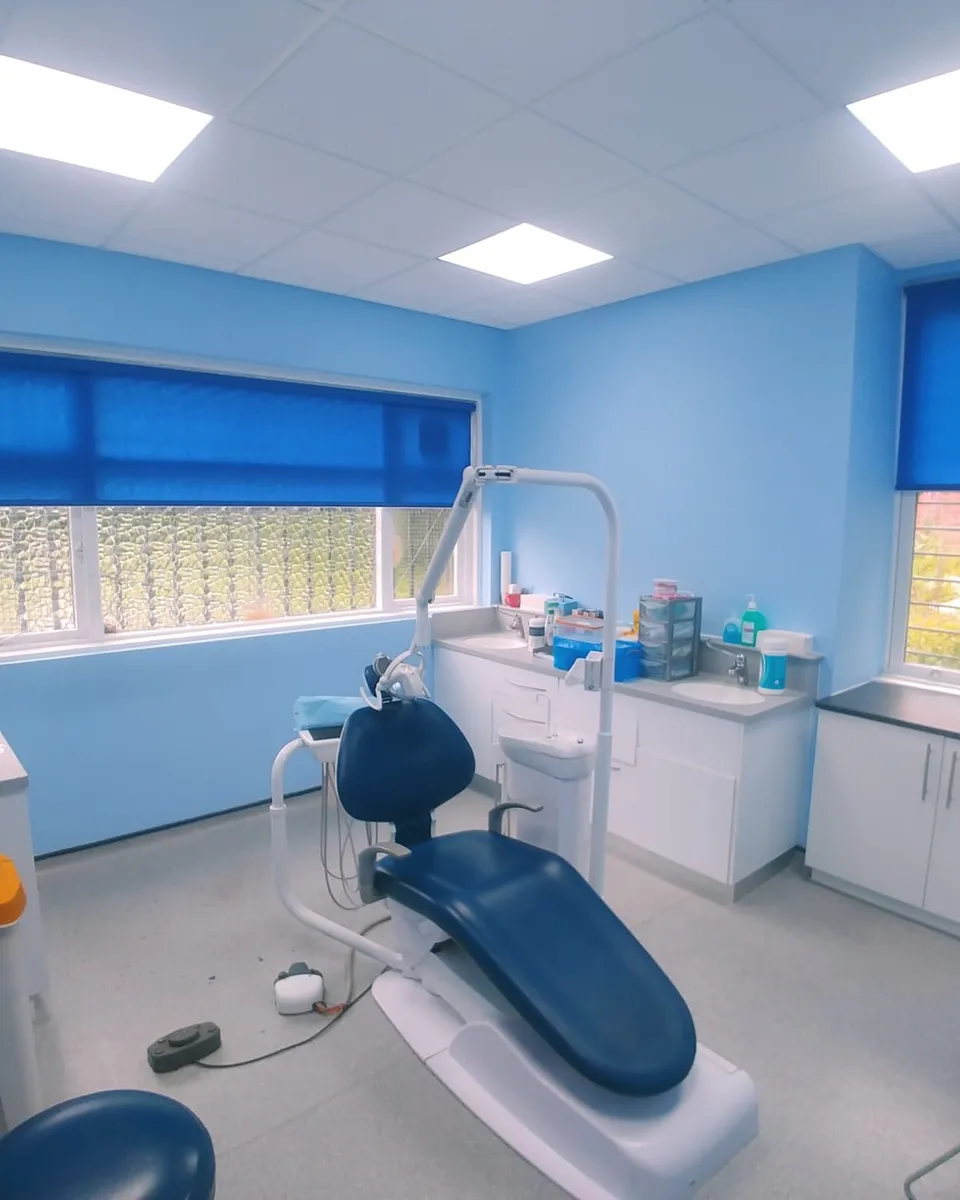
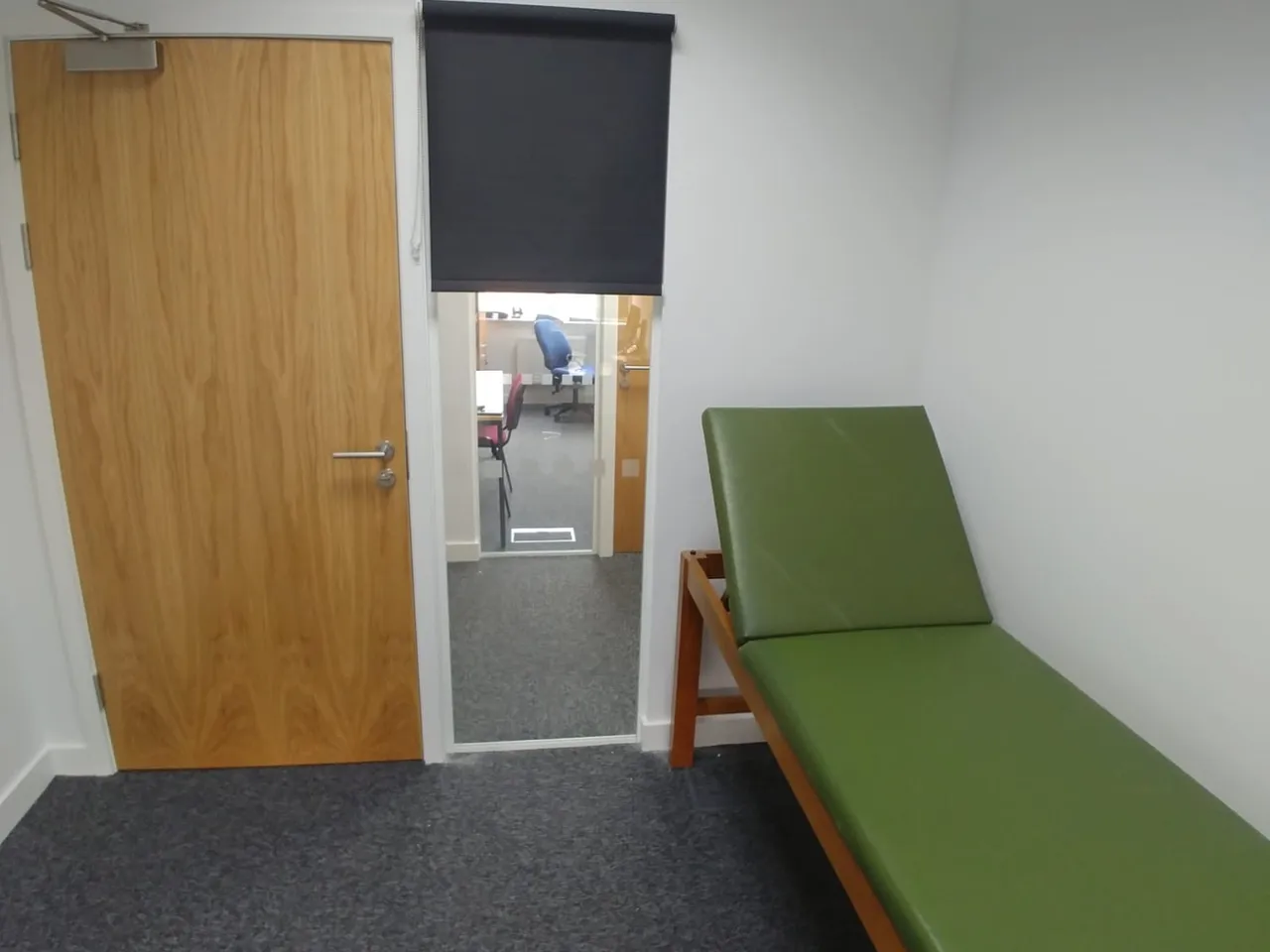
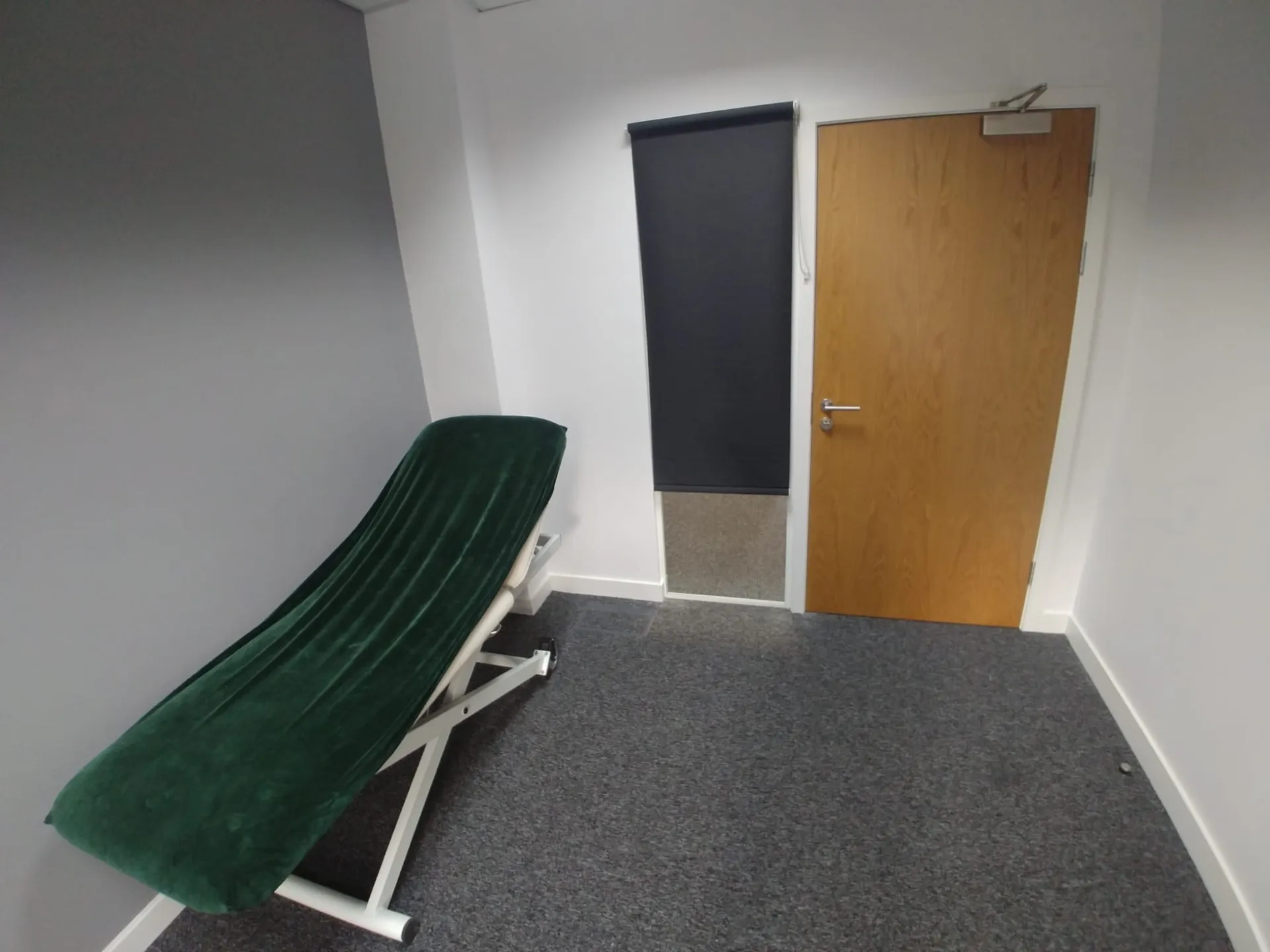
In a lot of clinical rooms a roller blind does the window job better than a curtain. At a private clinic in Cheadle, BBS fitted dark roller blinds to the internal glazed panels next to the treatment-room doors for privacy from the corridor, and the same roller to the external windows for light control. One finish did both jobs.
What HBN 00-10 Part E changed
Health Building Note 00-10 Part E, curtains and tracking, replaced the older HTM 66. It is the guidance NHS estates teams now work to for cubicle curtains and tracks. It covers curtain selection and changes, maintenance of the track, and has a section on curtain tracks and anti-ligature products in mental health settings.
That last section matters. In a mental health unit, and in some dementia and learning disability settings, any of these three tracks may need to be a load release version, which lets go under a set weight rather than taking it. Which rooms need that is a decision for the clinical team’s risk assessment. The fitter’s job is to install the product so it releases as designed and to leave the documentation behind.
BBS fitters are Yewdale Kestrel certified installers, which covers the load release range: window curtain tracks, divider and cubicle tracks, roller blinds and vertical blinds. Certification is held by each installer and renewed annually, and the certificates for the team on your job come with the quote. Yewdale’s Kestrel installer training covers the HBN 00-10 Part E guidance.
Fabric and fire
Cubicle and window curtains in healthcare are usually specified against BS 5867 Part 2. Type B is the level commonly regarded as suitable for non-domestic buildings, subject to the fire risk assessment. Type C adds 50 wash cycles to the test and is the level often asked for in healthcare, where curtains are laundered hard and often.
Certificates are issued per fabric, not per range, so it is the certificate for the actual fabric on your job that belongs in the estates file. For BBS, that means Yewdale contract fabrics certified to BS 5867 Part 2 Type B, with the certificate for the specified fabric supplied on every commercial order. A Type C certified fabric is available where the specification calls for it.
Disposable and reusable curtains
Wards change cubicle curtains often. We fit reusable wipe-clean curtains, and disposable ones for a high-turnover bay. The track and the curtain are specified together. Both sit on the healthcare blinds page with the rest of the clinical ranges.
What to put in the specification
A clear brief for a clinical space names each track by what it does and where it goes:
- Cubicle track round which bed spaces, with the shape of each run and the ceiling type above.
- Divider track across which rooms, with the length and where the curtain parks when open.
- Window track or blind at which windows, with the privacy and light each room needs.
- Which rooms, if any, need load release product, taken from the clinical risk assessment.
- The fire performance the curtain fabric must meet.
- How the curtains will be changed, and by whom.
Fitting in a live clinical building
Clinics and wards rarely close for a refit. BBS fits with its own directly employed team, Enhanced DBS across the fitting team, CSCS carded with our own SSSTS qualified supervision. A project specific RAMS comes before works begin, and we ask to see the asbestos register at induction before anyone drills into a ceiling. We carry £5,000,000 public liability and £10,000,000 employers’ liability cover with Aviva.
For a ward, clinic or treatment suite, start on the healthcare blinds page.