Why does a building need a fire certificate for its blinds?
In a workplace, school, care home, hotel or any other non-domestic building, the Regulatory Reform (Fire Safety) Order 2005 puts fire safety on the responsible person: usually the employer, owner or whoever controls the premises. Choosing curtains and blinds is part of that duty.
That is why a facilities manager, school business manager or main contractor asks for a fire certificate before fabric goes up. It is evidence for the fire risk assessment, and it is often the first thing a fire officer or insurer asks to see after a fire.
What do BS 5867 Part 2 Types A, B and C mean?
The standard most UK buildings work to is BS 5867-2:2008, Fabrics for curtains, drapes and window blinds, Part 2: Flammability requirements. It sets three levels.
| Type | What the test involves | Notes |
|---|---|---|
| A | A small flame is held against the face of a hanging sample for ten seconds. | The least demanding level. |
| B | The flame goes on for fifteen seconds under a different test method. The fabric fails if a hole or flame reaches the top or side edge of the sample, or if flaming debris drops off. | Whether B is enough is decided by the building’s specification and fire risk assessment. |
| C | The fabric is tested before cleaning and again after 50 cycles of a standard commercial wash, with flame applied for between five and thirty seconds. | The most demanding level, because the fabric must still pass after 50 commercial washes. |
The point of the cleaning cycles is simple. A fabric that passes the flame test on day one but loses its treatment in the wash is not much use in a building where curtains go to the laundry every few months.
Does one fire certificate cover the whole fabric range?
This is where most buildings get caught out. A fire certificate covers the fabric that was tested. It does not cover every colour in the book, every weight in the range, or every fabric from the same manufacturer.
We learned this the careful way ourselves. When the certificate from one of our fabric suppliers arrived, it covered seven named fabrics rather than the whole range. So the claim on our website is written to match the paper:
Yewdale contract fabrics certified to BS 5867 Part 2 Type B, with the certificate for the specified fabric supplied on every commercial order. A Type C certified fabric is available where the specification calls for it.
If a supplier tells you “all our fabrics are fire retardant”, ask which certificate covers the one you are buying. A good supplier will send it without a fuss.
Treated or inherent
Fabric reaches fire performance in one of two ways.
Inherently flame retardant fabric is woven from fibres that resist burning for the life of the fabric. Washing does not wash it out.
Treated fabric has had a flame retardant finish applied. Many treated fabrics are excellent, but the certificate tells you what cleaning the test covered. If the fabric will be laundered more often, or more harshly, than the test allowed for, raise it before ordering.
For roller blinds that are wiped rather than washed, this matters less. For curtains in a care home or ward that go through a laundry, it matters a lot.
Linings and made-up curtains
BS 5867-2 tests a lined curtain as a combination, front and back. A certified face fabric sewn to an untested lining is a new combination, and its paper no longer tells the whole story.
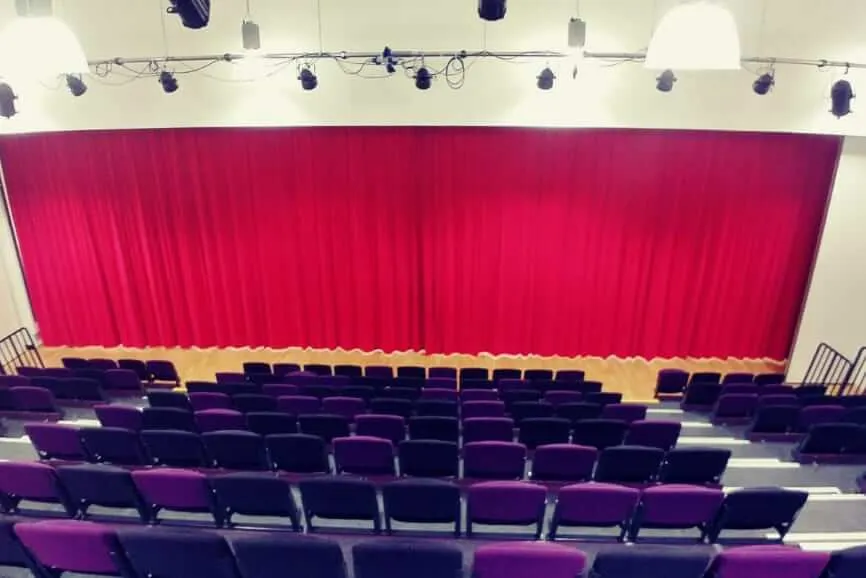
The same thinking applies to stage curtains, blackout interlinings and any made-up item with more than one layer. Ask how the finished curtain was tested, not only the face fabric.
The standard also asks for curtains to carry a permanent label with set information. It is worth checking the label is there at handover, because it is the easiest way for the next person to trace a curtain back to its certificate.
How do you check a fire certificate you are handed?
A useful fire certificate or test report shows:
- The fabric name and reference, matching your order exactly
- The standard and type, for example BS 5867-2:2008 Type B
- The test house and the report number
- The date of the test
- Any cleaning carried out before testing, and how many cycles
- Whether it was tested as a combination, if the item is lined
Then file it with the fire risk assessment and the room schedule, so anyone can see which fabric went into which room. When a curtain is replaced years later, the certificate for the new fabric goes in the same file.
Other standards you might see
On European or international jobs you may meet BS EN 13773, the European classification for curtains and drapes, or national standards from other countries. They are not the same test as BS 5867, so a pass under one does not automatically mean a pass under another. If a specification names a particular standard, the certificate needs to name the same one.
What we send
On every commercial order we send the certificate for the specified fabric, alongside our insurance certificates and a project specific RAMS, before we start. If your specification calls for Type C, say so at the start and we will quote a fabric that holds it.
For the rest of the paperwork a buyer should ask for, see what to ask a blind fitter before they start on site, and for the full list in one place, our compliance page.