What a screen fabric does
A screen fabric is a woven blind fabric, usually glass fibre or polyester coated in PVC, with small gaps in the weave. Lowered over a window, it cuts the direct brightness of the sky and sun while still letting daylight in and leaving the outside visible through the weave.
That combination is why it suits offices. People want daylight and a view, and they need the glare off their monitors. A blackout blind fixes the glare by taking away the rest, which is why screen fabric is usually the first thing to look at.
What does openness factor mean?
Openness factor is the share of the fabric that is open weave, given as a percentage. A 5% fabric is 5% gaps and 95% yarn.
The common grades are:
- 1%: the tightest weave. Strong glare and heat control, and the view through is the most muted. Suits very bright, low sun elevations and rooms where screens matter most.
- 3%: the usual starting point for offices. A good balance of glare control and view.
- 5%: more view and more daylight, with a little less control of direct sun. Common on north and east facing windows, or where the view is the point.
- 10%: an open weave. Softens light rather than controlling it. Rarely enough on its own for a south or west elevation full of monitors.
A lower number is not simply better. It stops more glare, but it also cuts more daylight and more view. The right grade depends on how bright the worst window gets, not the average one.
Colour matters as much as the number
Two fabrics with the same openness factor can behave very differently depending on colour.
Dark screens (charcoal, black, dark grey) absorb light. Your eye adjusts to the darker fabric, so the view through the weave is clearer and the blind itself does not glow when the sun hits it. They are usually the better choice for view and for screen work.
Light screens (white, pale grey, sand) reflect more of the sun’s heat back out through the glass and keep the room brighter. But when direct sun lands on them, the fabric itself becomes bright, which can be a glare source in its own right, and the view through is harder to see.
Some fabrics have a light outer face and a darker inner face, or a metallised backing, to get some of both. They cost more, but on a hot elevation they can be worth it.
Look at samples in the room, against the actual window, at the time of day the problem is worst. A sample book on a desk tells you almost nothing about how a screen fabric looks with the sun behind it.
Where the glare actually comes from
Before choosing fabric, work out what the problem is:
- Low sun on south and west windows in the afternoon, and low winter sun all day. This is the hardest glare to stop and usually needs the tighter grades.
- Bright sky on north and east elevations. Softer, and often handled with a more open weave.
- Reflections from neighbouring glass buildings. Common in city centres and business parks, and easy to miss if the survey is done on a dull day.
- Screens facing the window. A desk layout with monitors facing the glass will need more control than one with the glass to the side.
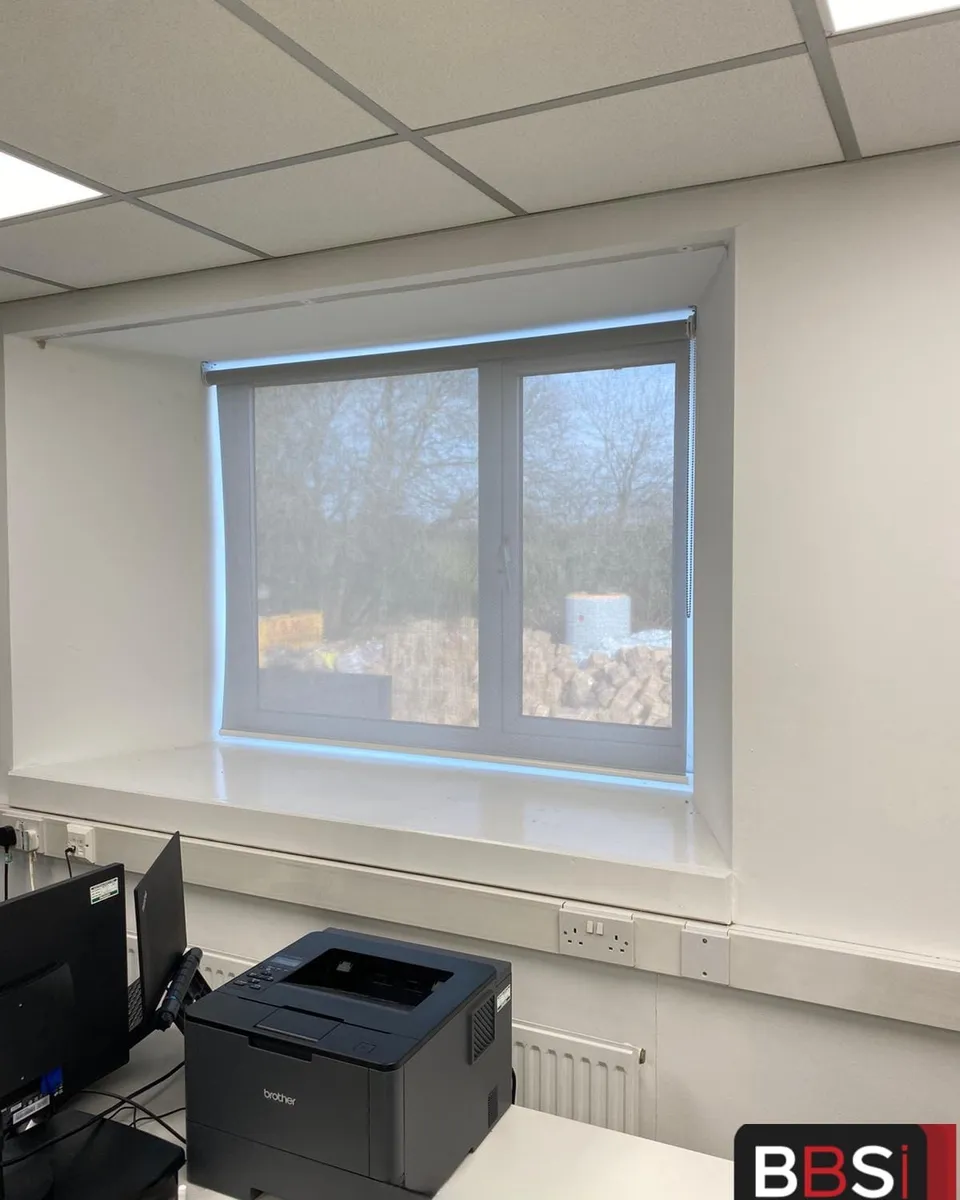
Faith in Nature at Radcliffe is a good example of a simple brief done well: the offices wanted glare off the windows and the ambient daylight kept. A pale screen roller in each window reveal did both, where a blackout would have shut out the light the rooms work in.
When is screen fabric the wrong choice?
Screen fabric reduces glare. It does not stop it completely, and it does not darken a room.
Meeting and training rooms with projectors or large displays usually need a dim-out or blackout roller. A screen fabric will soften a projected image, however tight the weave.
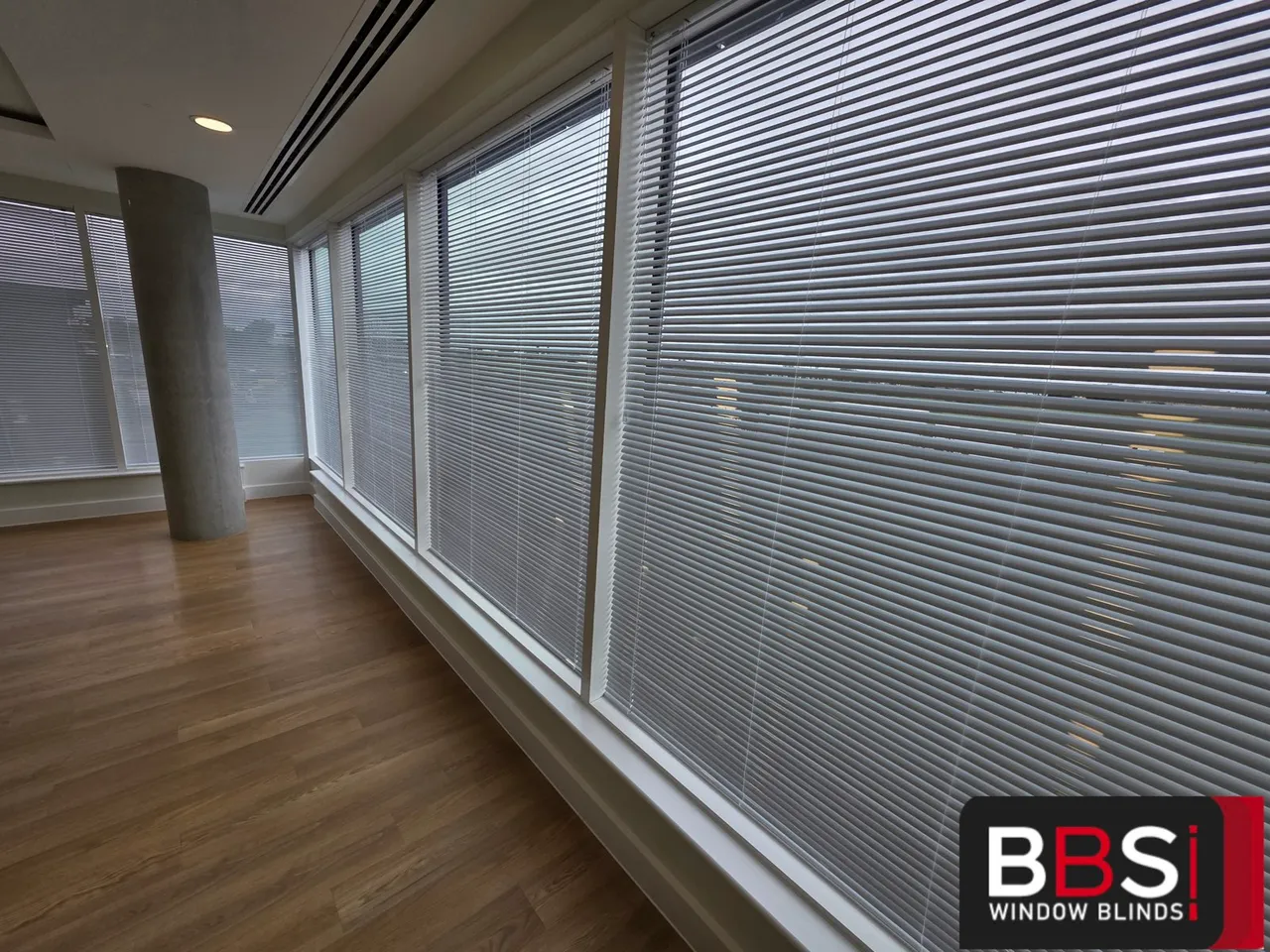
Desks in direct sun all afternoon may need a dim-out, lowered only as far as the sun needs. At Money Wellness on Salford Quays we fitted dim-out rollers to full-height glazing across several floors, so each pane can come down just far enough to stop direct sun on the monitors while the view below stays open.
Some rooms need both. A double roller, with screen and blackout on one bracket, lets a room switch between a working day and a presentation.
Heat, not just glare
A screen fabric inside the glass does reduce some of the sun’s heat, especially in lighter or backed colours, but most of the heat has already come through the glass by the time it reaches the blind. If overheating is the main complaint, it is worth talking to the building’s services team as well. External shading, solar film or ventilation may be part of the answer.
Keep the building consistent
From the street, blinds are part of the building. A tower with three colours and two openness factors on one elevation looks patched, and building management often has rules about it.
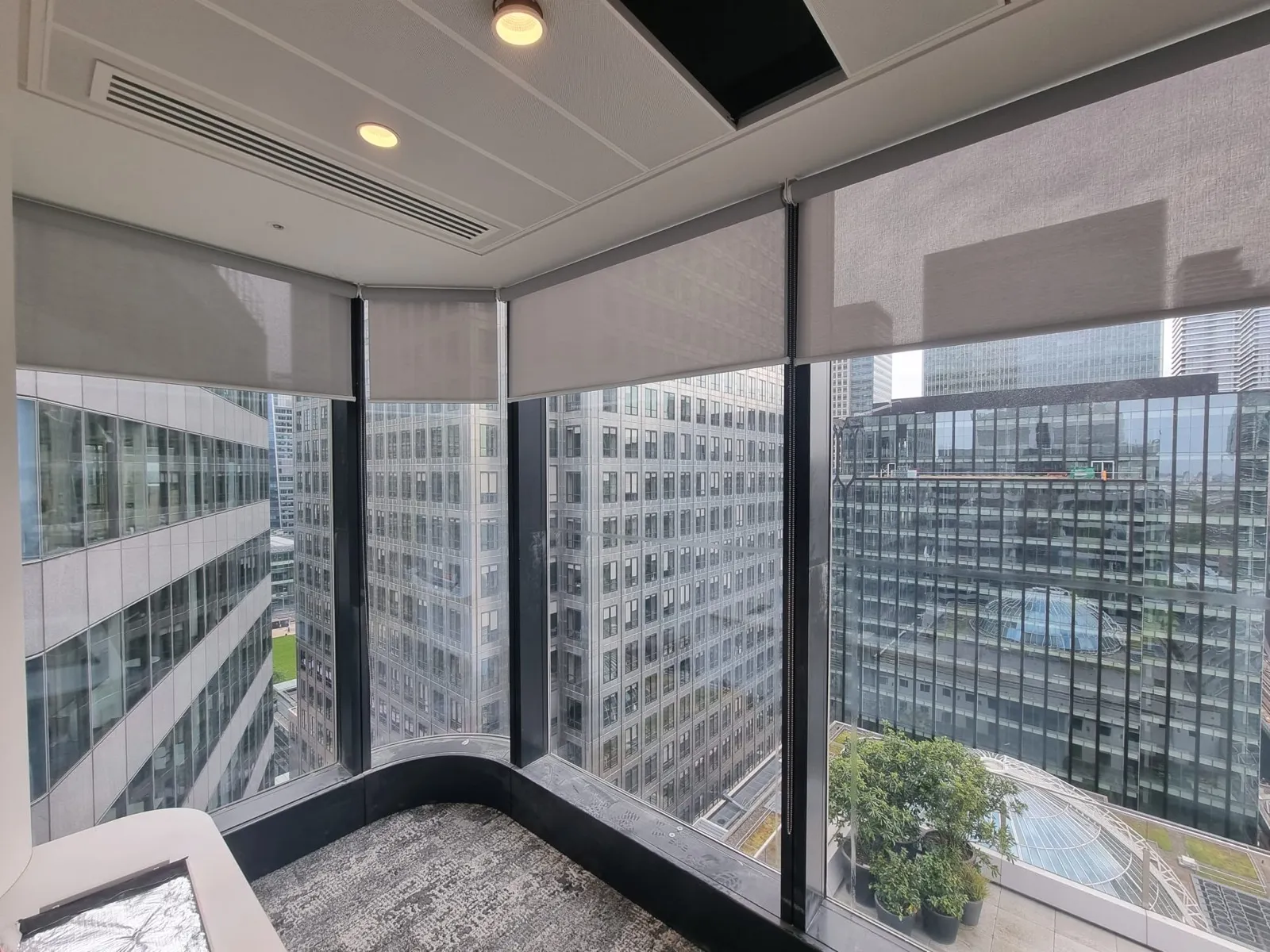
The usual approach is one fabric and colour per elevation, sometimes one for the whole building, with any darker rooms handled by a blackout behind or in a matching colour. On the Canary Wharf fit-out, every pane of the perimeter curtain walling across two floors took a screen fabric roller, about 200 blinds in all, so the glare comes off the desks and the building reads as one from outside.
If a building is being done in phases, reserve or order the fabric so the later floors match the first. Our phasing guide covers that.
What to send us
The quickest way to a good fabric choice is a floor plan or a list of rooms, which way each elevation faces, and a note of where people complain about glare. We will bring screen samples in two or three grades and colours to the survey so you can see them against the glass. Start on the office blinds page.